
Spiral vs Flexible Ventilation Duct for Undersea Tunnel Temporary Ventilation
Short answer: For temporary ventilation in an undersea tunnel, spiral and flexible duct are not interchangeable products competing for the same job — they cover different segments of the same air path. Flexible ventilation duct, available from 200 mm to 3,200 mm diameter in lay-flat sections of 1 m to 300 m, is the practical choice for long headings that follow a tunnel boring machine. Spiral (semi-rigid) ventilation duct, available from 200 mm to 2,800 mm diameter in 1 m to 20 m sections reinforced with 5 mm to 10 mm spring steel wire, is the practical choice where the duct must hold its shape, work under negative pressure, or resist abrasion on straight high-velocity runs. Both duct types appear in the Hong Kong Trunk Road T2 Tunnel case, which is the reference point for this comparison.
This guide is written for procurement managers, tunnel ventilation engineers and EPC buyers assembling a duct package for an undersea or marine crossing. It compares the two duct types against the constraints that actually decide the purchase — flame retardancy, air-supply compliance, diameter and airflow, section length and joint count, installation labour and documentation — and it sets out the purchasing terms and acceptance checks to agree before the order is released. Product data in this article comes from SULONG (Jiangsu Sulong Eco-Technologies Co., Ltd), a manufacturer of both duct families, whose records link both product lines to the Trunk Road T2 Tunnel scope of 5 km of duct.
Why Undersea Tunnel Ventilation Is a Constraint Problem Before It Is a Product Choice
Temporary ventilation in a subsea drive is specified under conditions that leave little tolerance for a duct that underperforms. Deep underground works involve high pressure, elevated humidity, constant friction and potential explosion hazards, and the duct is expected to operate in 24/7 continuous high-pressure ventilation mode rather than intermittently.
The functional duty is narrow and unforgiving. The duct connects to the ventilation fan, delivers fresh air to the working face, supports hazardous gas dilution, provides anti-static safety airflow, and serves dust extraction. It works alongside fans and suspension and repair fittings, and every joint along the run is a potential leak point in a system where leakage compounds with distance.
The Trunk Road T2 Tunnel puts those constraints into numbers. The project is an important component of Hong Kong Route 6 and a key undersea tunnel connecting Kowloon and Tseung Kwan O. It was constructed using tunnel boring machines, which avoided large-scale land reclamation and minimised impact on the marine environment. The tunnel is approximately 3.4 km long, including about 2.1 km of undersea tunnel. For temporary ventilation, the case record lists 5 km of duct, with a duration recorded as two years.
That ratio — 5 km of duct across 3.4 km of tunnel — is the number buyers should study. It shows that temporary ventilation duct on a subsea drive is not a short consumable list; it is a rolling inventory with replacement, extension and re-routing built in. In a subsea heading there is limited opportunity to add intermediate access for a mid-point fan or a duct changeover, so continuity and joint integrity carry more of the ventilation duty than they would on a land tunnel with portals and adits.
Regulatory air-supply floors buyers should map to their jurisdiction
- United States, general underground construction: 29 CFR 1926.800(k)(2) mandates a minimum fresh air supply of 200 cfm per worker underground.
- United States, underground coal: mine ventilation ducting must comply with MSHA 30 CFR Part 75 standards for underground safety.
- European Union and explosion-hazard zones: equipment falls under the 2014/34/EU ATEX Directive, supported by EN ISO 80079-36 and EN ISO 80079-37.
These frameworks are jurisdiction-specific and do not automatically transfer between markets. A buyer should confirm which framework the project specification actually invokes rather than assuming a global default, then require the duct supplier to evidence exactly that scope.
Industry Background: Why Duct Specification Is Being Revisited
The commercial context explains the renewed attention on duct selection. The global mine ventilation market was valued at USD 1.42 billion in 2024 and is projected to reach USD 2.03 billion by 2030, a CAGR of 6.2%, according to Strategic Market Research. The wider global air duct market was valued at USD 7.14 billion in 2023 and is projected to reach USD 10.20 billion by 2032, according to SNS Insider. Within that, the global flexible ducting market was USD 203.97 million in 2024 and is expected to reach USD 335.78 million by 2033, per Intel Market Research. Persistence Market Research notes that underground mining accounts for the dominant segment of mine ventilation demand because of the critical need for hazardous gas dilution.
Growth alone does not make selection easier, because the standards landscape is fragmented. Flame retardancy for duct fabric is commonly evidenced against NFPA 701:2015 and DIN 4102 B2. Explosion protection is evidenced through ATEX type examination. Airtightness of circular duct is addressed by EN 12237 in Europe, but that standard is scoped to round sheet-metal ductwork, so buyers comparing a fabric-and-wire semi-rigid spiral duct against a metal spiral duct should check the standard's scope before applying it as a like-for-like criterion.
The practical consequence is that on a project like Trunk Road T2, the tender document — not the market — determines what acceptable means. The buyer's job is to translate that document into duct construction, certification scope and acceptance tests.
What the Two Duct Constructions Actually Are
The difference between a spiral and a flexible ventilation duct is structural, not cosmetic, and it drives everything downstream: how the duct is transported, how it is hung, how many joints the run carries and how it behaves under pressure.
Spiral ventilation duct (semi-rigid)
A spiral ventilation duct is a semi-rigid construction: PVC coated or PVC laminated fabric formed over a spring steel wire helix and welded. The wire, in diameters from 5 mm to 10 mm, provides wear protection and high pressure resistance, and it is what allows the duct to hold a circular section without internal pressure support.
- Diameter range: 200 mm to 2,800 mm, with custom diameters available.
- Section length: 1 m to 20 m, with custom lengths available.
- Fabric weight: 300 gsm to 2,000 gsm.
- Performance: FR (flame retardant) or FRAS (flame retardant antistatic).
- Pressure regime: suitable for positive pressure or negative pressure environments.
- End connections: zipper, Velcro or steel ring.
- Manufacturing process: welding.
- Certification: ISO 9001, ATEX, CE, CNMA and SGS test reports.
- Common model designations: Ф600mm×10m, Ф1200mm×10m, Ф1800mm×10m, Ф2500mm×5m.
Related duct variants in the same family include oval spiral duct and rectangle duct constructions, which matter on constrained alignments where a full circular section will not fit the available envelope.
Flexible ventilation duct
A flexible ventilation duct is a lay-flat construction produced with seamless one-piece fish-back welding automation. There is no wire helix, so the duct collapses flat for transport and storage and follows curves without pre-forming.
- Diameter range: 200 mm to 3,200 mm, with custom diameters available.
- Section length: 1 m to 300 m, with custom lengths available.
- Tensile strength: 1,000 N to 4,200 N.
- Fabric weight: 300 gsm to 2,000 gsm.
- Performance: FR or FRAS.
- Flame retardancy: approved to NFPA 701:2015 and DIN 4102 B2.
- Tensile and tear strength: approved by DIN 53354 and DIN 53363 test methods.
- End connections: zipper, Velcro, steel ring or eyelets.
- Certification: ISO 9001, ATEX, CE, CNMA and SGS test reports.
- Common model designations: Ф760mm×10m, Ф1015mm×10m, Ф1400mm×10m, Ф1600mm×10m, Ф2800mm×100m.
The construction also carries related fitting variants — lay-flat duct, oval duct, twin duct, tee duct, Y-piece duct, bend duct and adapter duct — which is relevant on a subsea drive where junctions, bifurcations and fan connections are part of the same package.
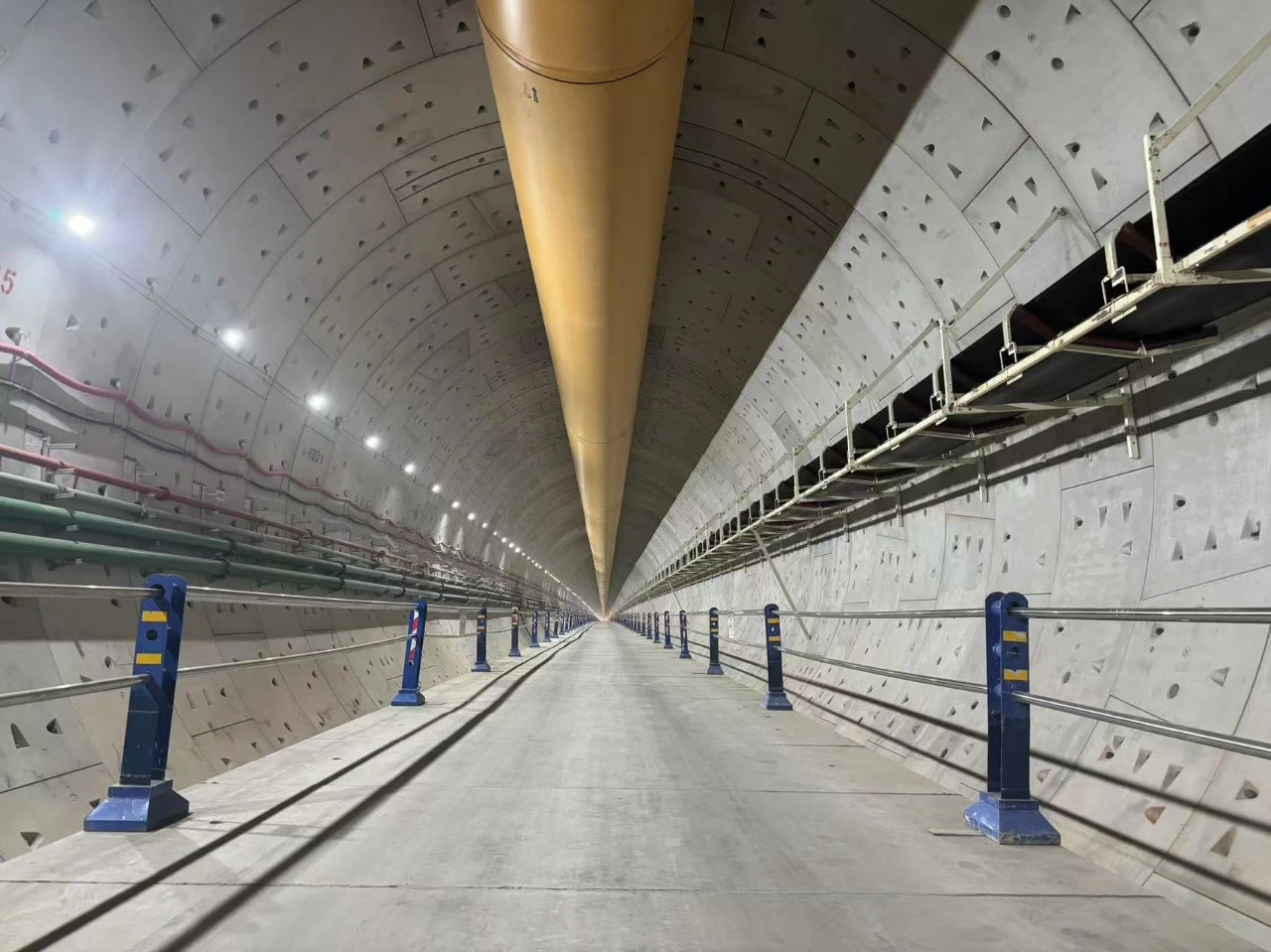
Where the structural difference shows up on site
- Joint count. Section length is the single biggest multiplier on a long drive. At 20 m spiral sections, a 500 m run requires 25 sections; at 300 m flexible sections, two sections cover 600 m. Fewer joints means fewer leak paths, fewer connection checks and faster advance.
- Shape retention versus storage volume. Spiral duct holds its circular form and stacks as rigid sections; flexible duct collapses flat into a compact coil or roll, which changes both site storage and container loading.
- Pressure regime. Spiral duct is specified for both positive and negative pressure duty. Buyers should confirm the intended pressure regime for a flexible duct run with the supplier rather than inferring it.
- Diameter ceiling. Flexible duct reaches 3,200 mm against 2,800 mm for spiral duct as standard, which matters when the airflow calculation drives the design toward very large diameters.
- Abrasion on straight runs. The wire helix in a spiral duct provides wear protection and pressure resistance on straight, high-velocity stretches where fabric alone would take the load.
The Trunk Road T2 Tunnel Reference: 5 km of Duct Across 3.4 km of Tunnel
The Trunk Road T2 Tunnel is the most useful public reference for this comparison because it is a genuine subsea drive with a substantial temporary ventilation scope. The recorded project facts are concise: approximately 3.4 km of tunnel, about 2.1 km of it undersea, tunnel boring machine construction that avoided large-scale land reclamation, 5 km of duct, and a construction approach chosen to limit marine environmental impact.
The case highlights recorded for the project are high flame retardancy, easy installation, flexible large-diameter ventilation duct, and compliance with strict safety requirements for urban rail tunnel projects. Both duct types — flexible ventilation duct and spiral ventilation duct — are recorded against the Trunk Road T2 Tunnel case, which is consistent with a hybrid layout rather than a single-type order.
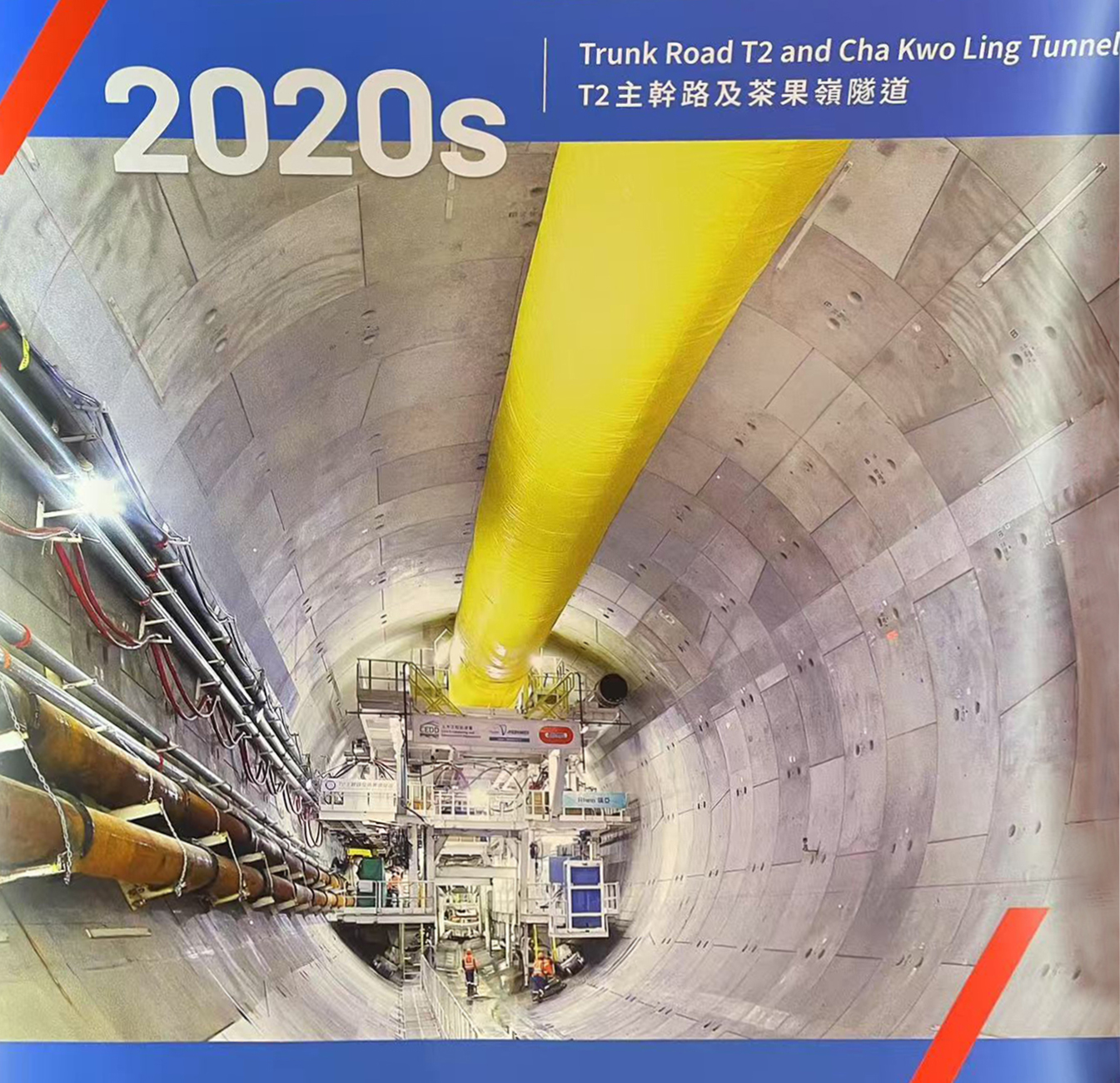
Two lessons transfer to other subsea projects. First, a large-diameter flexible duct was central to the temporary ventilation, which is consistent with the geometry of a TBM-driven heading that curves and advances continuously. Second, the presence of both duct types in the same project indicates that the specification was resolved at segment level — the alignment was split, and each segment received the duct construction that suited it. That is the decision model this article recommends.
Decision Criteria: What to Score Before Choosing Between Spiral and Flexible
Seven criteria carry most of the decision weight on an undersea temporary ventilation package. Each should be scored per segment of the alignment, not once for the whole tunnel.
- Flame retardancy and antistatic performance. FR and FRAS are different grades and should be specified per zone. On SULONG duct lines, FR or FRAS performance is available on both constructions, and the ATEX type examination covers 550 gsm to 800 gsm FR and FRAS fabric grades.
- Diameter and required airflow. Where a US-standard air-supply floor applies, 200 cfm per worker under 29 CFR 1926.800(k)(2) drives the airflow calculation, and airflow drives diameter. Flexible duct reaches 3,200 mm; spiral duct reaches 2,800 mm as standard, with custom diameters available on both.
- Section length and joint count. This is the criterion most often under-weighted. A 1 m to 300 m flexible section range versus a 1 m to 20 m spiral section range changes the number of joints, the number of suspension points and the installation hours on a multi-kilometre run.
- Pressure regime. Confirm whether the segment runs under positive or negative pressure. Spiral duct is specified for both; flexible duct duty should be confirmed against the fan curve with the supplier.
- Abrasion and friction. Smooth internal walls and low friction loss reduce the power demand placed on secondary counter-rotating fans. Where the run is straight and velocities are high, the wire reinforcement of a spiral duct adds wear protection.
- Installation and handling labour. Easy installation is a recorded highlight on the Trunk Road T2 case. Lay-flat flexible duct is generally quicker to move and hang over long distances; shape-holding spiral duct is quicker to align on straight fixed runs where pre-formed geometry is an advantage.
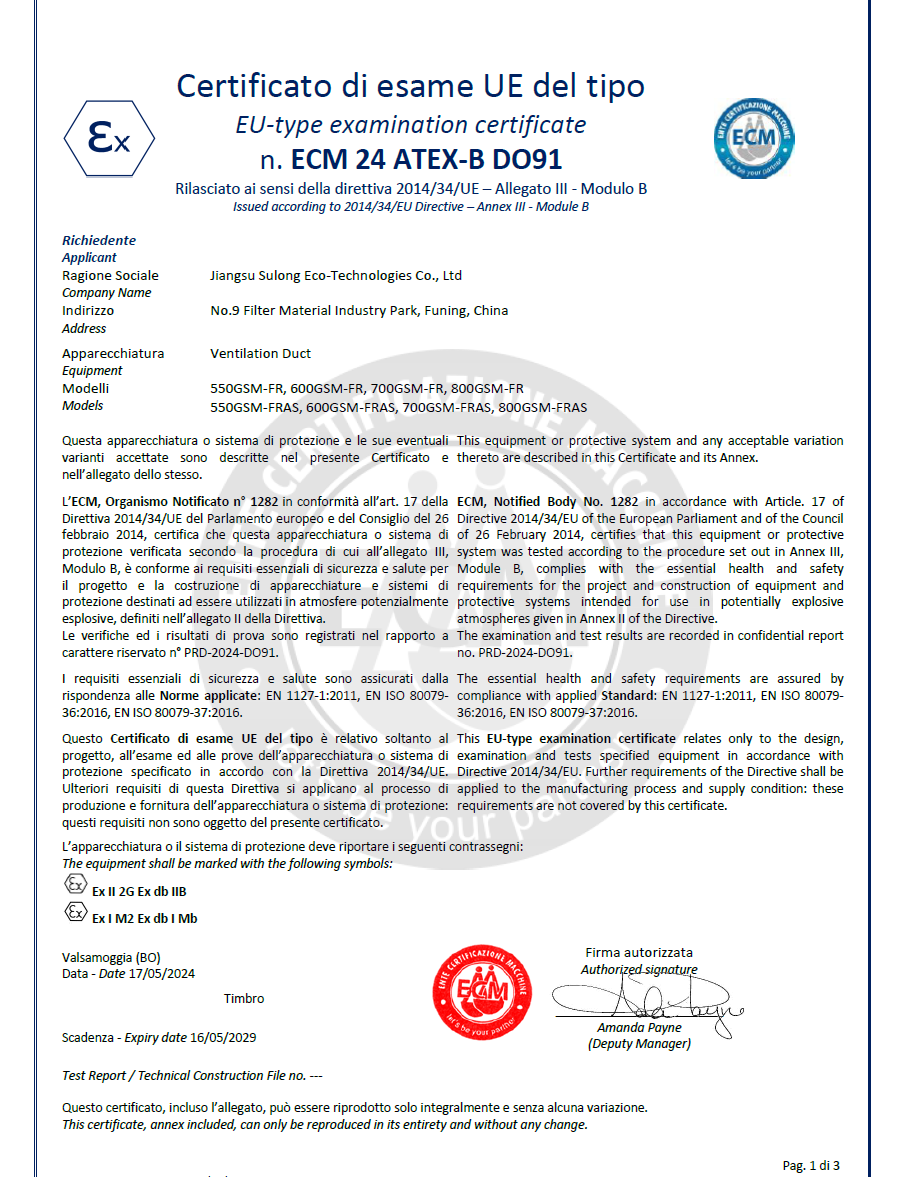
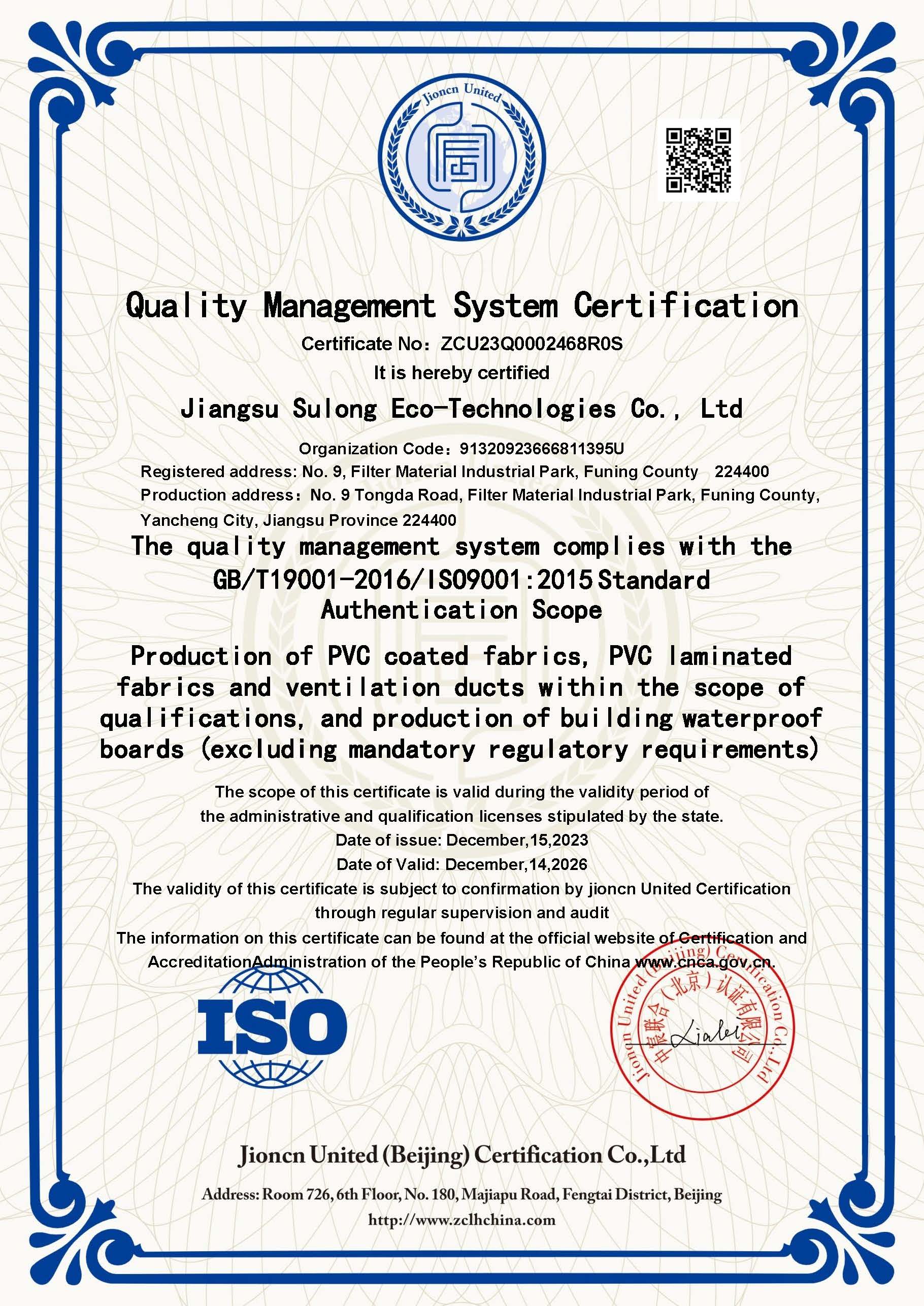
- Documentation scope. A certificate is only useful if its scope, grade and validity dates match the project. The SULONG ISO 9001 certificate ZCU23Q0002468R0S, issued by Jioncn United (Beijing) Certification Co., Ltd, runs from 15 December 2023 to 14 December 2026. The ATEX type examination certificate ECM 24 ATEX-B D091, issued by ECM, runs from 17 May 2024 to 16 May 2029. Both dates should be checked against the construction programme.
Step-by-Step: Running the Selection and Purchase Process
Step 1 — Fix the ventilation duty
Start with the air requirement, not the duct. Establish the fresh-air volume per worker where a regulatory floor applies, the hazardous gas dilution requirement, the dust extraction load and the fan static pressure available. The duct is then sized to deliver that duty with acceptable leakage over the full run length.
Step 2 — Map the alignment by segment
Split the drive into segments: portal approach, curved TBM heading, straight undersea run, shaft connections and junctions. Trunk Road T2 Tunnel shows why this matters — 3.4 km of tunnel, 2.1 km of it undersea, is not one uniform duty.
Step 3 — Assign a duct type to each segment
Long curved advancing headings generally suit flexible duct in long sections. Straight high-velocity runs, negative-pressure segments, shaft connections and areas exposed to abrasion generally suit spiral duct. Junctions and bifurcations require the matching fitting range — tee, Y-piece, bend and adapter duct.
Step 4 — Build the compliance file before pricing
Collect certificate numbers, standards, scope and expiry dates first. A supplier who cannot produce a certificate number and grade scope at quotation stage will not produce it at delivery stage either.
Step 5 — Set purchasing terms
Fix diameter and tolerance, section length per type, total metres per segment, fabric weight in gsm, FR or FRAS grade, end-connection type per joint, reinforcement wire diameter for spiral sections, spare sections and repair fittings, packing format, delivery schedule and warranty terms.
Step 6 — Agree acceptance criteria in writing
Define what will be checked on arrival, who checks it and what evidence is required. This is where most duct disputes are prevented — see the next section.
Purchasing Terms and Acceptance Criteria to Verify
Purchasing terms
- Dimensional specification per section: diameter and section length stated separately for each duct type and each segment.
- Fabric specification: weight in gsm within the 300 gsm to 2,000 gsm range, and FR or FRAS grade stated by zone.
- Connection hardware: zipper, Velcro, steel ring or eyelets, agreed per joint, with spares included.
- Reinforcement: spring steel wire diameter within the 5 mm to 10 mm range for spiral sections.
- Certification scope: certificate numbers, issuing bodies, covered grades and validity dates written into the purchase order.
- Order flexibility: standard stock and trial orders are not subject to strict minimum order quantities; custom non-standard fabric specifications are negotiated against raw-material batch sizes.
- Lead time: 15 to 30 days for standard orders, with expedited production available for urgent maintenance requirements.
- Warranty and support: free replacement rather than repair for production defects within the 12-month warranty period, 24/7 support, video-based technical diagnosis within 2 hours, global on-site engineer dispatch and bilingual installation manuals.
Acceptance criteria
- Certificate-to-batch match: confirm the delivered fabric grades sit inside the ATEX scope of 550 gsm to 800 gsm FR and FRAS, and that the ISO 9001 scope covers ventilation duct production.
- Dimensional check: measured diameter and section length against the agreed model list.
- Seam inspection: seamless one-piece fish-back welded construction on flexible duct, welded construction on spiral duct.
- Physical performance reports: tensile and tear results to DIN 53354 and DIN 53363, plus SGS test reports for the delivered batch.
- Leakage evidence: confirm the leakage performance claimed for the supplied specification, since the high-strength series is documented with a leakage rate reduced to nearly 0% under high air pressure.
- Production records: 100% inspection under ISO 9001:2015, supported by a three-level quality control system of batch incoming inspection, in-process patrol inspection every two hours, and 100% final physical performance testing before shipment.
Use Cases: Where Each Duct Type Has Been Deployed
Reference projects show the same pattern: large-diameter flexible duct as the backbone of long drives, spiral duct where shape retention and pressure resistance matter.
- Trunk Road T2 Tunnel, Hong Kong (undersea road tunnel): approximately 3.4 km long including about 2.1 km undersea, 5 km of duct for temporary ventilation, with recorded highlights of high flame retardancy, easy installation and flexible large-diameter duct meeting strict safety requirements.
- Melbourne Metro Rail Project, Australia: a 9 km tunnel connecting the Sunbury and Dandenong route, with 1,500 mm diameter ventilation duct supplied since 2019 over a three-year scope, selected on high flame retardancy, easy installation, flexible large-diameter design and compliance with strict underground safety requirements.
- Xi'an–Chengdu Railway Project, China: 20 km of duct over four years for underground tunnel ventilation, delivered to China Railway 2nd Engineering Group on a 19.68 km tunnel forming part of the national high-speed rail network, with long tunnel and low air leakage rate as the recorded highlights.
- Guangxi Beibu Gulf Project, China: 30 km of duct over three years for underground tunnel construction temporary ventilation, on a major national water conservancy project using slurry balance shield tunnelling machines.
- Buriticá Gold Mine (global tier-1 mining conglomerate and EPC contractor): 20 km of duct per year over three years for primary forced ventilation and hazardous gas dilution, using the 700 gsm high-strength flame-retardant series with zero-leakage seamless construction and compliance with SGS, ATEX and NFPA 701, achieving a zero defect and rejection rate across the supply.
Comparison Table: Spiral vs Flexible Ventilation Duct
| Decision factor | Spiral ventilation duct (semi-rigid) | Flexible ventilation duct |
|---|---|---|
| Construction | PVC coated or laminated fabric over spring steel wire helix, welded | PVC coated or laminated fabric, seamless one-piece fish-back welded |
| Reinforcement | Spring steel wire, 5 mm to 10 mm diameter | No wire helix; lay-flat construction |
| Diameter range | 200 mm to 2,800 mm (custom available) | 200 mm to 3,200 mm (custom available) |
| Section length | 1 m to 20 m (custom available) | 1 m to 300 m (custom available) |
| Fabric weight | 300 gsm to 2,000 gsm | 300 gsm to 2,000 gsm |
| Performance grade | FR or FRAS | FR or FRAS |
| Flame retardancy evidence | ISO 9001, ATEX, CE, CNMA, SGS test reports | NFPA 701:2015 and DIN 4102 B2 approved; ISO 9001, ATEX, CE, CNMA, SGS test reports |
| Tensile strength | Not stated in the product data sheet; confirm per order | 1,000 N to 4,200 N; tensile and tear per DIN 53354 and DIN 53363 |
| Pressure regime | Positive pressure or negative pressure | Confirm intended pressure regime with the supplier |
| End connections | Zipper, Velcro, steel ring | Zipper, Velcro, steel ring, eyelets |
| Handling and storage | Holds circular shape; stacks as rigid sections | Collapses flat; coils or rolls for compact storage |
| Segment where it is typically deployed | Straight high-velocity runs, negative-pressure duty, shaft connections, fixed trunk sections | Long curved advancing headings, large-diameter supply runs, rapid re-routing |
| Model designations | Ф600mm×10m, Ф1200mm×10m, Ф1800mm×10m, Ф2500mm×5m | Ф760mm×10m, Ф1015mm×10m, Ф1400mm×10m, Ф1600mm×10m, Ф2800mm×100m |
Frequently Asked Questions
What certification evidence should an undersea tunnel buyer request for spiral and flexible ventilation ducts?
Ask for certificate numbers, scope and validity dates, not logos. Both SULONG duct lines are listed with ISO 9001 certificate ZCU23Q0002468R0S, issued by Jioncn United (Beijing) Certification Co., Ltd, valid from 15 December 2023 to 14 December 2026, covering production of PVC coated fabrics, PVC laminated fabrics and ventilation ducts. Both lines are also listed against EU ATEX type examination certificate ECM 24 ATEX-B D091, issued by ECM under the 2014/34/EU ATEX Directive, EN ISO 80079-36 and EN ISO 80079-37, valid from 17 May 2024 to 16 May 2029, covering 550 gsm to 800 gsm FR and FRAS grades for underground coal mines, metal mines and flammable gas explosion hazardous areas. The flexible duct is additionally approved to NFPA 701:2015 and DIN 4102 B2. Check every date against the construction window before the order is placed.
Can one supplier deliver both spiral and flexible duct in matching diameters and connection types?
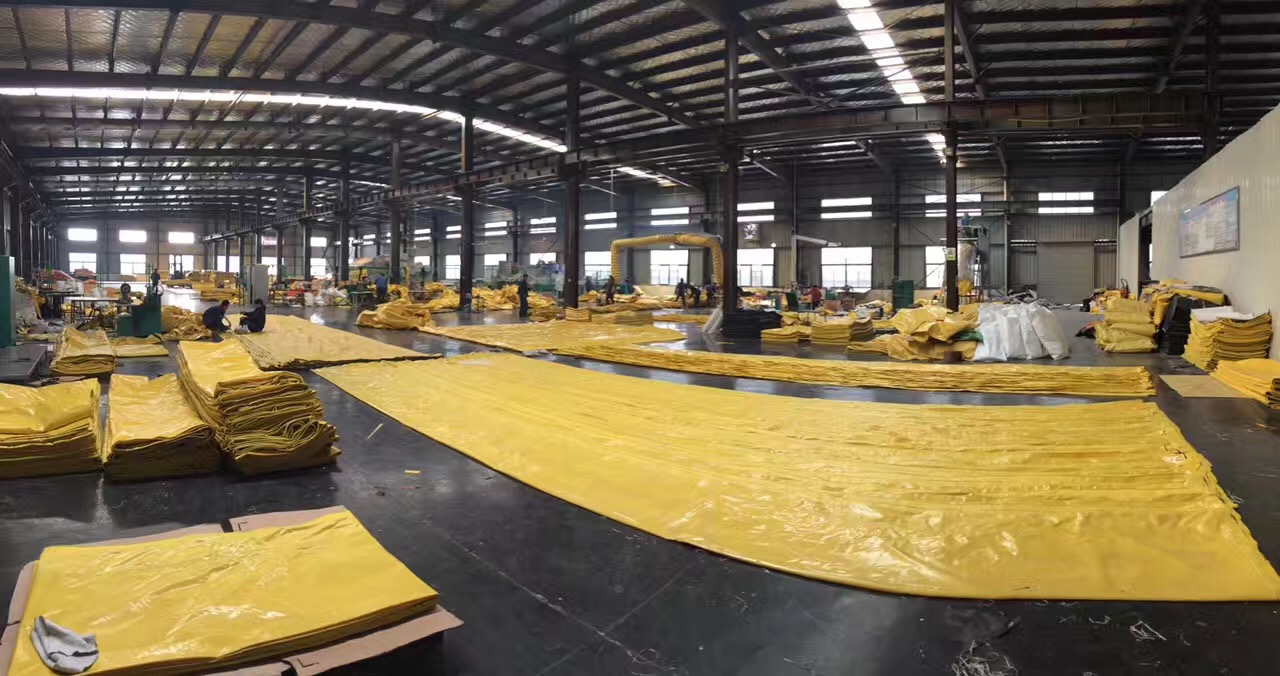
Yes, and on a hybrid layout that is the simpler procurement route. Jiangsu Sulong Eco-Technologies Co., Ltd, founded in 2007 and based in Funing, Yancheng, Jiangsu, manufactures both product lines in-house on its own PVC coating and welding lines. Spiral duct covers 200 mm to 2,800 mm diameter in 1 m to 20 m sections; flexible duct covers 200 mm to 3,200 mm in 1 m to 300 m sections. Both use zipper, Velcro or steel ring end connections and both are available in 300 gsm to 2,000 gsm fabric with FR or FRAS performance, so a single technical submittal can cover both duct types in one approval cycle.
What drives the cost difference between spiral and flexible duct on a project of this scale?
No public price list exists, because every package is quoted from its configuration. The variables that move a project quotation are diameter, section length and resulting joint count, fabric weight between 300 gsm and 2,000 gsm, FR versus FRAS grade, end-connection hardware, total metres per segment, delivery schedule and certification scope. Buyers should compare the full installed cost rather than the per-metre figure, because a 20 m spiral section and a 300 m flexible section carry very different joint counts, suspension points and installation hours across a multi-kilometre drive.
Can we validate both duct types before committing to a multi-kilometre order?
Yes. SULONG operates a flexible minimum order quantity: there are no strict minimum order quantities for standard stock and mining trial orders, and custom non-standard fabric specifications are negotiated based on raw-material batch sizes. A trial order allows the project team to verify diameter tolerance, weld quality, connection fit and FR or FRAS marking on site before releasing the main quantity, which is the lowest-risk way to settle a spiral versus flexible decision with real handling data.
What lead time and production capacity apply to a 5 km undersea tunnel duct order?
Standard orders require a lead time of 15 to 30 days, and expedited production is available to fast-track urgent maintenance requirements. Monthly capacity exceeds 80,000 m, supported by in-house seamless integral forming automated production lines, and annual capacity is over 1 million metres of high-strength mining ventilation duct. On that basis, 5 km of duct represents a fraction of a single month of output, so the schedule constraint on a T2-scale package is approval and logistics rather than production. To review the full specification set, download the SULONG ventilation duct catalogue.
Conclusion: Split the Alignment, Then Buy
The spiral versus flexible question does not have a single answer, and projects that try to force one do not get a cleaner specification — they get a compromised one. The structural difference is real: spiral duct holds shape and carries wire reinforcement for pressure and abrasion duty in 1 m to 20 m sections; flexible duct delivers 1 m to 300 m sections and diameters to 3,200 mm with NFPA 701:2015 and DIN 4102 B2 flame retardancy evidence, which is why it was central to a 3.4 km undersea drive with 5 km of duct. Both appear in the Trunk Road T2 Tunnel record, and both are the correct answer for different segments of that alignment.
The buying discipline that follows is straightforward. Fix the ventilation duty, split the alignment into segments, assign a duct type to each, build the certification file before you discuss price, write the purchasing terms per segment, and agree acceptance criteria that name certificate numbers rather than certificate logos.
Next step: if you are preparing a duct package for an undersea or long tunnel drive, send the segment breakdown and duty figures for a specification review, or request a trial order to test both duct types on site.
Catalogue: Ventilation Duct Catalogue — SULONG (PDF)
Website: www.js-sulong.com
Contact: Autumn Cui · Tel +86-18251952515 · Email autumn@js-sulong.com · WhatsApp +86 182 5195 2515
Address: No.9 Filter Material Industry Park, Funing, Yancheng, Jiangsu Province, China
Have Questions or Need More Details?
Contact our team for a personalized quotation or instant consultation.
Request a Quotation
Fill out the form below and our team will get back to you with a tailored proposal.
WhatsApp Direct Chat
Prefer to chat in real-time? Message us on WhatsApp for instant assistance & quick answers.
- Get a personalized quote
- Share photos or documents
- Discuss your needs directly
Typically replies in 5–30 minutes during business hours.