Spiral vs Flexible Ventilation Duct: Decision Guide for Long Undersea Tunnels
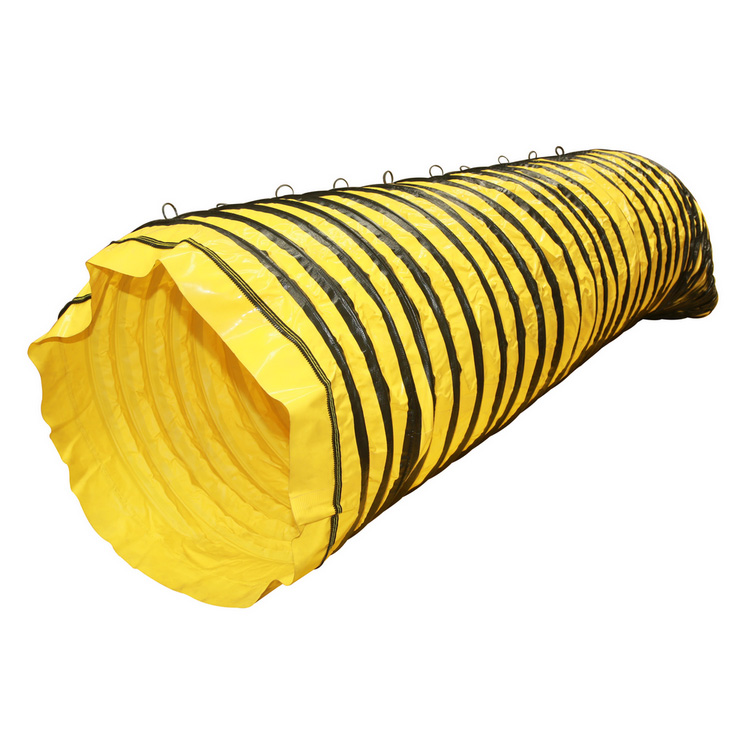
Cover: spiral ventilation duct supplied for underground tunnel and mine ventilation circuits.
On a long undersea tunnel, the spiral versus flexible ventilation duct question is rarely answered once, and it is rarely answered as a straight either/or. The practical structure used on long drives is a split circuit: flexible ventilation duct carries air along the advancing face line where long sections and fast repositioning matter most, while spiral (semi-rigid) ventilation duct holds the parts of the circuit that need a stable cross-section and pressure tolerance. The Hong Kong Trunk Road T2 Tunnel — approximately 3.4 km long, including about 2.1 km of undersea tunnel — is a case where both duct types were used for temporary ventilation during undersea road tunnel construction, at a project scale of 5 km of ventilation ducting completed within 2 years.
Why a Long Undersea Tunnel Is a Different Duct Problem
Undersea tunnel ventilation is not simply "tunnel ventilation with a longer tunnel." Three physical conditions change the duct specification conversation.
First, there is only one advancing face. A tunnel boring machine drive has a single working face that moves forward continuously. Every duct segment behind it must either be added, extended, or repositioned around the machine's backup train. Duct weight, section length, and connection type become productivity variables rather than minor details.
Second, the space behind the face is genuinely restricted. Segmental lining rings, conveyor structures, rail lines, cabling, and the TBM backup gantries all compete for the same cross-section. The Trunk Road T2 Tunnel was constructed using tunnel boring machines, a method that avoided large-scale land reclamation and minimized impact on the marine environment — and the same method left limited clearance for ventilation infrastructure inside the tunnel envelope.
Third, air leakage compounds over distance. Thermal comfort, oxygen, and hazardous-gas dilution depend on delivered air volume at the face. Every joint in the duct chain is a potential leak path, and every leak forces the fan to work harder to achieve the same delivered volume. This is why the Trunk Road T2 Tunnel case is described by its defining technical characteristics — high flame retardancy, easy installation, and flexible large-diameter ventilation duct meeting strict safety requirements for urban rail tunnel projects — and why air-leakage control is treated as a system property, not a duct property alone.
A long undersea drive therefore rewards a duct architecture that keeps joints few, keeps sections movable, and keeps the installed duct round and stable under sustained pressure. Different duct types contribute to those outcomes in different ways.
Industry Background: Ventilation Demand Is Rising Faster Than Duct Standardisation
The underground ventilation sector is expanding across both mining and civil tunneling. The global mine ventilation market was valued at USD 1.42 billion in 2024 and is projected to reach USD 2.03 billion by 2030, at a CAGR of 6.2%, according to Strategic Market Research. Underground mining accounts for the dominant segment of that market, driven by the critical need for hazardous gas dilution, per Persistence Market Research. The wider air duct market was valued at USD 7.14 billion in 2023 and is projected to reach USD 10.20 billion by 2032, according to SNS Insider.
On the supply side, the global flexible ducting market was USD 203.97 million in 2024 and is expected to reach USD 335.78 million by 2033, according to Intel Market Research. In 2023, over 2.1 billion meters of flexible ducting were manufactured globally, with 30% dedicated to industrial ventilation, per Spherical Insights. Regionally, Asia Pacific dominated the spiral duct fittings market in 2025 with a 38.2% revenue share, driven by urbanization and industrial expansion, per Dataintelo.
Regulation is the other background force. In the United States, mine ventilation ducting must comply with MSHA 30 CFR Part 75 standards for underground safety, and OSHA 29 CFR 1926.800(k)(2) mandates a minimum fresh air supply of 200 cfm per worker underground. In Europe, EN 12237 specifies airtightness and pressure requirements for round sheet metal air ducts. These frameworks do not prescribe a duct material — they prescribe delivered air. That is the difference that matters when a project team decides how to split a circuit between flexible and spiral duct.
The Two Duct Architectures, Defined by Their Specifications
Before comparing them on a long undersea drive, it is worth stating what each product actually is at specification level. Both duct types in this guide are manufactured by Jiangsu Sulong Eco-Technologies Co., Ltd. (SULONG), a Chinese manufacturer of PVC coated fabric, PVC laminated fabric, and composite polymer ventilation ducts, founded in 2007 and operating a 40,000 m² facility with an annual capacity of over 1 million meters of high-strength mining ventilation ducts.
Flexible ventilation duct
A flexible ventilation duct is a fabric duct built from PVC coated fabric or PVC laminated fabric, manufactured with seamless one-piece fish-back welding automation technology. Its published specification range is:
- Diameter: Ф200 mm to Ф3200 mm
- Section length: 1 m to 300 m
- Tensile strength: 1,000 N to 4,200 N
- Material weight: 300 gsm to 2,000 gsm
- Performance rating: FR or FRAS
- Duct family: lay flat duct, oval duct, twin duct, tee duct, Y-piece duct, bend duct, adapter duct
- End connection options: zipper, Velcro, steel ring, eyelets
- Certification: ISO 9001, ATEX, CE, CNMA, SGS test reports
Because it is fabric-based, the flexible duct collapses and rolls for transport and can be supplied in very long sections. In underground applications it is used in mine projects, high-speed rail, subway, highway, hydropower station, and rock cave projects.
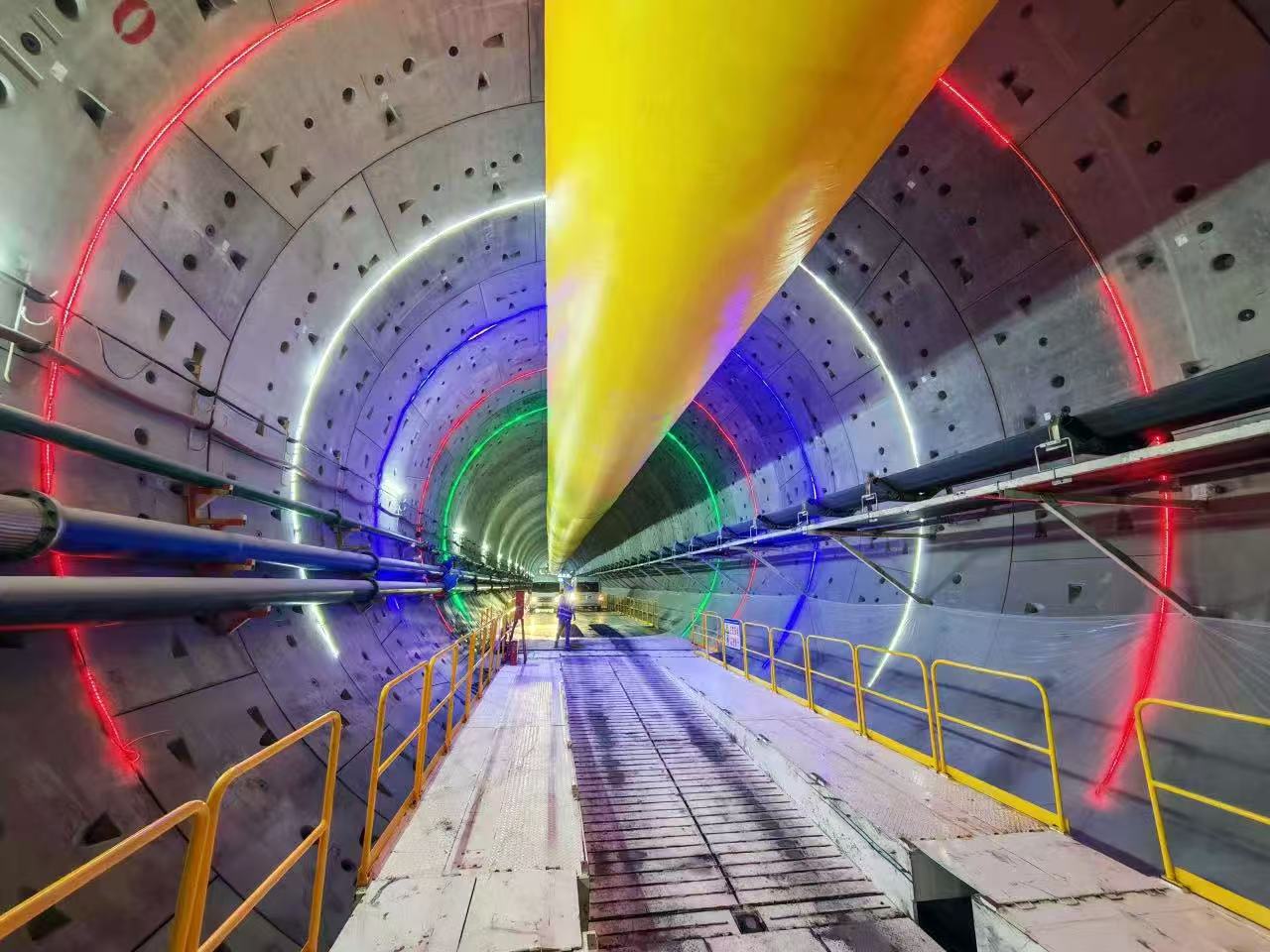
Flexible ventilation duct: long sections, collapsible format, seamless one-piece welded construction.
Spiral ventilation duct
A spiral ventilation duct is a semi-rigid duct combining PVC coated fabric or PVC laminated fabric with a spring steel wire helix, joined by welding. Its published specification range is:
- Diameter: Ф200 mm to Ф2800 mm
- Section length: 1 m to 20 m
- Usage environment: positive pressure or negative pressure
- Material weight: 300 gsm to 2,000 gsm
- Performance rating: FR or FRAS
- Duct family: semi rigid duct, oval spiral duct, rectangle duct
- Certification: ISO 9001, ATEX, CE, CNMA, SGS test reports
The wire helix is what makes the difference on site: the duct holds its circular section rather than depending on internal pressure to stay open, and the published usage environment covers positive pressure or negative pressure duty. Spiral ventilation duct is applied in mine ventilation system infrastructure projects and tunnel ventilation system infrastructure projects.
How Each Option Answers the Two Hardest Constraints
Constraint 1 — Installation in restricted space
The restricted-space problem on a long undersea drive is a handling problem. Around the TBM backup, personnel have narrow windows to move duct forward and to keep the line continuous.
Flexible duct addresses this through format. Long section lengths of up to 300 m mean far fewer joints to make up per metre of advance, and the fabric construction allows the duct to be folded or rolled when it needs to be moved. SULONG flexible duct is supplied in standard models including Ф760 mm × 10 m, Ф1015 mm × 10 m, Ф1400 mm × 10 m, Ф1600 mm × 10 m, and Ф2800 mm × 100 m. Connection hardware — zipper, Velcro, steel ring, or eyelets — is selected according to how the crew prefers to make up and break the line.
Spiral duct addresses the same problem through rigidity. Rather than being dragged into position and inflated, a semi-rigid spiral section can be installed as a defined piece of the circuit with a known shape, which suits runs that follow fixed geometry, bends, transitions, and structures that must not deform. Standard models include Ф600 mm × 10 m, Ф1200 mm × 10 m, Ф1800 mm × 10 m, and Ф2500 mm × 5 m.
The Trunk Road T2 Tunnel case record lists easy installation as one of the performance highlights of the duct supplied, alongside high flame retardancy and flexible large-diameter capability — a combination that reflects how tight the installation window is on an undersea road tunnel built by TBM.
Constraint 2 — Maintaining low air leakage over kilometres
Leakage on a long drive has two sources: the joints between sections, and the duct body itself.
Flexible duct reduces joint count structurally. With section lengths up to 300 m, the number of connections between the fan and the face is far lower than with short rigid sections. The body of the duct is produced with seamless one-piece fish-back welding automation, meaning the duct wall is formed as a continuous piece rather than stitched from narrower panels. A project record for a global tier-1 mining conglomerate and EPC contractor operating the Buriticá Gold Mine describes the 700 g/m² high-strength flame-retardant series as using zero-leakage seamless construction, with 100% stable, continuous operation and a zero defect and rejection rate over a three-year, 20 km-per-year supply programme.
Spiral duct addresses leakage and pressure differently. Its welded fabric-and-wire construction maintains a fixed internal diameter under operating pressure, so the designed airflow area does not change with the pressure profile. Because the published usage environment covers positive pressure or negative pressure, it can be specified for circuit segments where the duty direction changes. On the Xi'an–Chengdu Railway project, a 20 km duct supply over 4 years for underground tunnel ventilation, the recorded project highlight was a long tunnel with a low air-leakage rate — evidence that leakage performance is treated as a headline project metric in underground work, not an afterthought.

In-house production line for seamless one-piece ventilation duct fabric.
Step-by-Step: Allocating Spiral and Flexible Duct on a Long Undersea Drive
The following sequence is a decision order, not a purchasing list. It is written for project engineers and procurement teams working on Evaluation to Execution stage tunnel ventilation packages.
- Establish the required delivered air, not the installed duct length. Start from the regulatory baseline for the jurisdiction. In the United States, OSHA 29 CFR 1926.800(k)(2) sets a minimum fresh air supply of 200 cfm per worker underground, and mine ventilation ducting must comply with MSHA 30 CFR Part 75. Work backwards from required delivered volume at the face, then add an allowance for leakage along the circuit.
- Map the circuit geometry and identify which segments cannot deform. Segments that must hold a fixed shape, pass through fixed structures, or operate in a defined pressure direction are spiral duct candidates. Segments that follow the advancing face and are repositioned regularly are flexible duct candidates.
- Check the diameter envelope against available clearance. Flexible duct is published from Ф200 mm to Ф3200 mm; spiral duct from Ф200 mm to Ф2800 mm. On a TBM drive, the limiting factor is usually the clearance around the backup train, not the tunnel bore.
- Match section length to handling capability. Longer flexible sections (up to 300 m) reduce joint count and installation time; shorter spiral sections (1 m to 20 m) give more precise fit in fixed runs.
- Confirm the flame and explosion-rated requirement for the drive. Both duct types are available in FR or FRAS construction. For hazardous areas, the ATEX Type Examination Certificate ECM 24 ATEX-B D091 covers 550GSM-FR, 600GSM-FR, 700GSM-FR, 800GSM-FR and the corresponding FRAS grades, for use in underground coal mines, metal mines and flammable gas explosion hazardous areas, issued under the 2014/34/EU ATEX Directive, EN ISO 80079-36 and EN ISO 80079-37, valid to 16 May 2029.
- Lock the connection method before the first delivery. Zipper, Velcro, steel ring, and eyelet options exist for fabric duct. Choosing the wrong interface late in mobilisation costs more time than the duct itself.
- Define acceptance evidence up front. Require 100% pre-delivery inspection, third-party inspection support where applicable, and traceability documentation for every batch. SULONG operates 100% inspection under ISO 9001:2015 with a three-level quality control system: batch IQC checks, IPQC patrol inspections every two hours, and 100% FQC physical performance testing before shipment.
- Verify supply continuity for the full drive duration. A long undersea tunnel consumes duct continuously for years. SULONG produces over 80,000 meters per month with a monthly production output value reaching RMB 10 million, supported by in-house seamless integral forming automated production lines, and ships to Africa, Australia, Europe, South Africa, and Asia with a 60% export ratio.
Where This Split Circuit Has Been Used
Project records are the most useful reference point, because they show the duct types operating under the same conditions a new undersea tunnel will face.
Trunk Road T2 Tunnel, Hong Kong
The Trunk Road T2 Tunnel is an important component of Hong Kong Route 6 and a key undersea tunnel project connecting Kowloon and Tseung Kwan O. Constructed using tunnel boring machines, the project avoided large-scale land reclamation and minimized impact on the marine environment. It is approximately 3.4 km long, including about 2.1 km of undersea tunnel. Flexible ventilation duct and spiral ventilation duct were both used for temporary ventilation during undersea road tunnel construction, at a project scale of 5 km of ventilation duct and a project duration of 2 years. The recorded performance highlights are high flame retardancy, easy installation, and flexible large-diameter ventilation duct meeting strict safety requirements for urban rail tunnel projects.
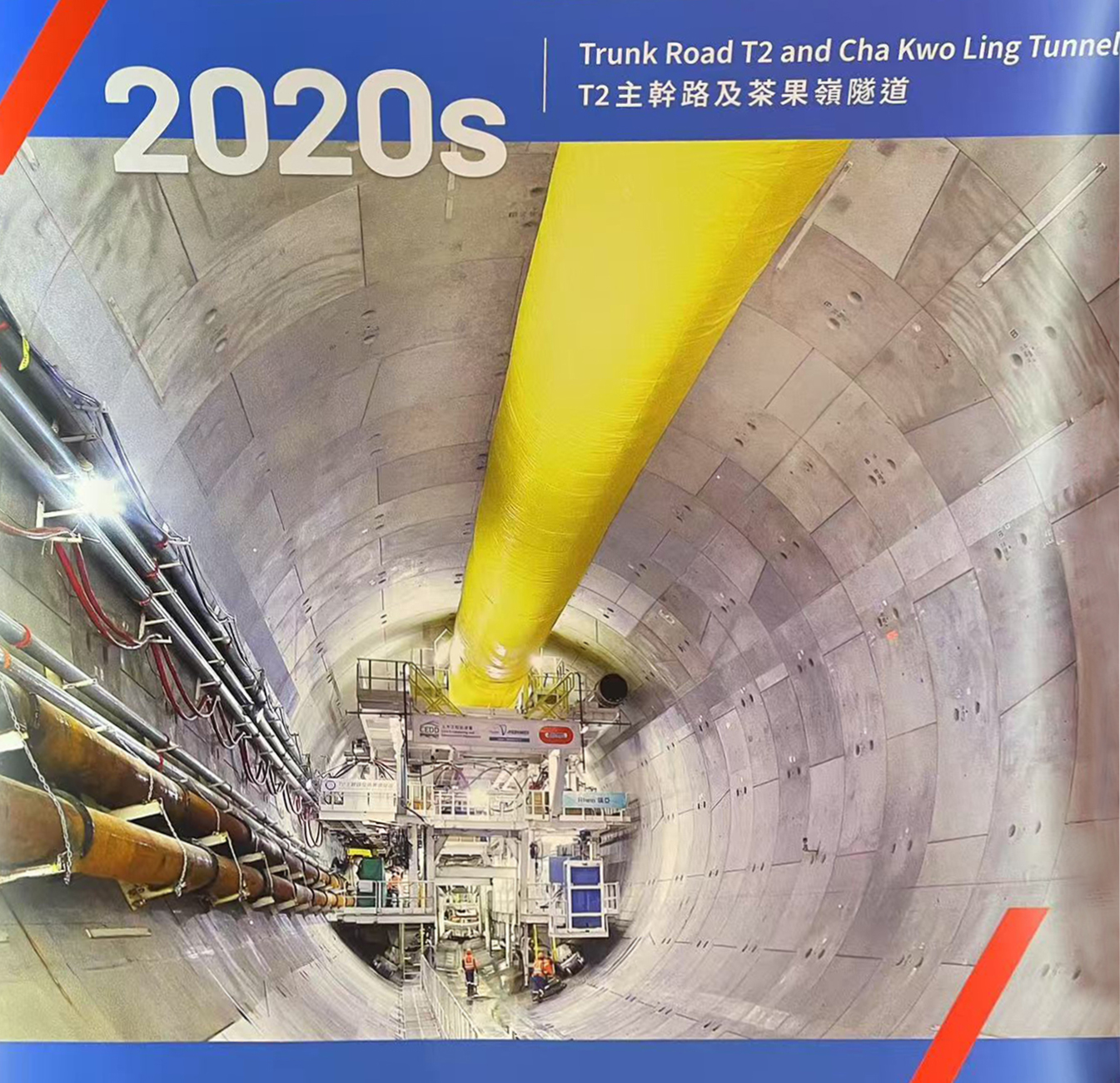
Trunk Road T2 Tunnel, Hong Kong — approximately 3.4 km, including about 2.1 km of undersea tunnel.
Melbourne Metro Rail Project, Australia
The Melbourne Metro Rail Project involves a 9 km tunnel connecting the Sunbury and Dandenong railway route. Construction was scheduled to begin in late 2018 and operations were expected to start in 2025. SULONG has supplied 1,500 mm diameter ventilation ducts for this project since 2019, with recorded highlights of high flame retardancy, easy installation, and flexible large-diameter ventilation duct meeting strict safety requirements for underground tunnel projects.
Xi'an–Chengdu Railway, China
Undertaken by China Railway 2nd Engineering Group, this project is a component of the national "Eight Vertical and Eight Horizontal" high-speed rail network with a total length of 19.68 kilometres. SULONG supplied 20 km of duct over 4 years for underground tunnel ventilation, with the recorded highlight being a long tunnel with a low air-leakage rate.
Guangxi Beibu Gulf Project, China
This major national water conservancy project, undertaken by China Water Resources and Hydropower 14th Engineering Co., Ltd., has a total length of 30 km and used domestically advanced slurry balance shield tunneling machines of approximately 4 metres in diameter to address the region's water-rich, complex geology. Duct supply ran for 3 years for underground tunnel construction temporary ventilation.
Buriticá Gold Mine, global mining operation
A global tier-1 mining conglomerate and EPC contractor operates this project with a scale of 20 km of ventilation duct per year over a 3-year implementation period, used for primary forced ventilation and hazardous gas dilution. Recorded results were 100% stable, continuous operation with a zero defect and rejection rate, ensuring the supply of fresh underground air and compliance with safety standards for multinational mine audits.
Comparison Table: Spiral vs Flexible Ventilation Duct
| Specification | Flexible ventilation duct | Spiral ventilation duct |
|---|---|---|
| Diameter range | Ф200 mm to Ф3200 mm | Ф200 mm to Ф2800 mm |
| Section length | 1 m to 300 m | 1 m to 20 m |
| Material weight | 300 gsm to 2,000 gsm | 300 gsm to 2,000 gsm |
| Construction material | PVC coated fabric, PVC laminated fabric | PVC coated fabric, PVC laminated fabric, spring steel wire |
| Manufacturing process | Seamless one-piece fish-back welding automation technology | Welding |
| Usage environment (published) | Not specified in published data | Positive pressure or negative pressure |
| Performance rating | FR or FRAS | FR or FRAS |
| Duct family | Lay flat duct, oval duct, twin duct, tee duct, Y-piece duct, bend duct, adapter duct | Semi rigid duct, oval spiral duct, rectangle duct |
| Certification range | ISO 9001, ATEX, CE, CNMA, SGS test reports | ISO 9001, ATEX, CE, CNMA, SGS test reports |
| Standard models (examples) | Ф760×10 m, Ф1015×10 m, Ф1400×10 m, Ф1600×10 m, Ф2800×100 m | Ф600×10 m, Ф1200×10 m, Ф1800×10 m, Ф2500×5 m |
Reading the table for a long undersea drive: where joint count and repositioning dominate the risk, the longer flexible section length is the structural advantage. Where a fixed circular section and defined pressure direction dominate, the wire-reinforced spiral duct is the structural advantage. Both ranges share the same FR/FRAS performance options and the same certification set, so the decision usually turns on geometry and handling rather than on compliance category.
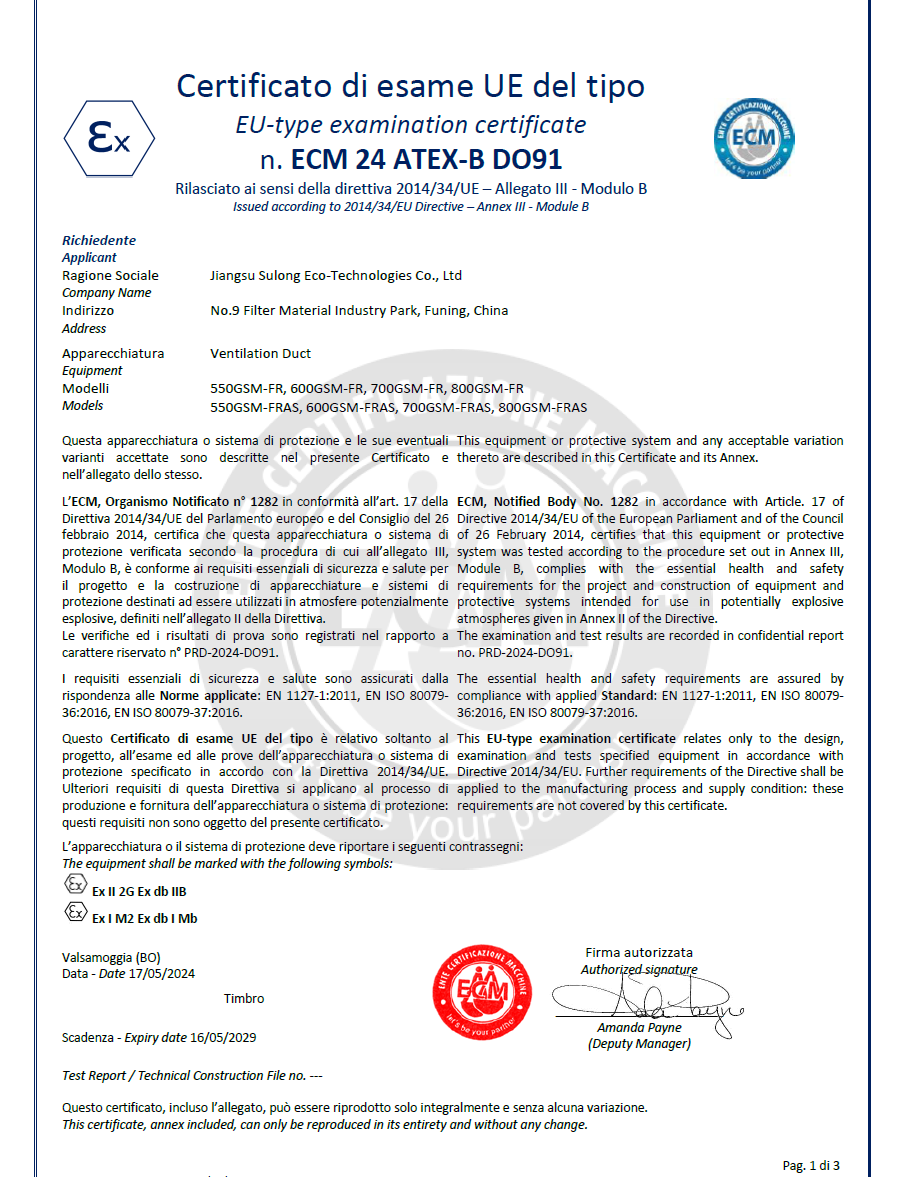
EU ATEX Type Examination Certificate ECM 24 ATEX-B D091, covering 550–800 GSM FR and FRAS ventilation duct grades.
FAQ
1. What certifications should a spiral or flexible ventilation duct hold for an undersea tunnel?
Both duct types should be able to show the same certification set: ISO 9001, ATEX, CE, CNMA, and SGS test reports. ATEX matters specifically where the drive falls under explosion-hazard classification. SULONG's EU ATEX Type Examination Certificate ECM 24 ATEX-B D091 covers 550GSM-FR, 600GSM-FR, 700GSM-FR, 800GSM-FR and the corresponding FRAS grades, for use in underground coal mines, metal mines and flammable gas explosion hazardous areas. It was issued under the 2014/34/EU ATEX Directive, EN ISO 80079-36 and EN ISO 80079-37, and is valid until 16 May 2029. The ISO 9001 certificate ZCU23Q0002468R0S covers production of PVC coated fabrics, PVC laminated fabrics and ventilation ducts, valid until 14 December 2026. SULONG ducts are also certified to flame retardant standards NFPA 701:2015 and DIN 4102 B2.
2. Can a manufacturer customise duct diameter, length, and connection type for a specific tunnel drive?
Yes, where the supplier operates OEM and ODM customisation. SULONG offers full OEM and ODM customisation with fully customisable technical parameters covering diameter, length, connection types such as steel rings, zippers and couplings, fabric weight from 210 to 1,400 gsm, and optional anti-static and flame-retardant properties. All production processes are completed in-house without outsourcing, supported by 25 granted patents held by the manufacturer. This matters on a long undersea drive because the duct interface at the fan, at the TBM backup, and at the face is usually project-specific rather than catalogue-standard.
3. What lead time and order terms should a tunnel project expect?
Standard orders typically require a lead time of 15 to 30 days, with expedited production available to fast-track urgent maintenance orders. On quantity terms, SULONG applies flexible MOQ: there are no rigid quantity restrictions for standard stock products, trial and prototype orders carry zero MOQ, and fully customised non-standard fabric specifications can be negotiated based on minimum raw material batch sizes. Delivery terms include FOB, CIF, and DAP for remote sites, and payment milestones such as a 30/70 split can be adjusted to align with official purchase order requirements.
4. Can a project validate the duct with a sample or trial order before full mobilisation?
Yes. Trial and prototype orders are accepted without a minimum order quantity, and acceptance evidence can be defined in advance: 100% pre-delivery inspection is conducted, third-party inspection such as SGS can be supported, and comprehensive traceability documentation including Mill Test Certificates and quality conformity labels is provided for every batch. For long undersea tunnelling, this validation step is the point at which the actual air-leakage behaviour of the chosen connections should be confirmed against the fan duty.
5. Has this duct combination been used on an actual undersea tunnel project?
Yes. On the Hong Kong Trunk Road T2 Tunnel — approximately 3.4 km long including about 2.1 km of undersea tunnel, built by tunnel boring machines — both flexible ventilation duct and spiral ventilation duct were used for temporary ventilation during undersea road tunnel construction, at a project scale of 5 km of ventilation duct completed within 2 years. The recorded highlights were high flame retardancy, easy installation, and flexible large-diameter ventilation duct meeting strict safety requirements for urban rail tunnel projects. To scope a similar requirement, you can request a project-based quote or the current ventilation duct catalogue directly from SULONG.
Conclusion: Choosing by Segment, Not by Product
The decision guide for a long undersea tunnel points to segment-level allocation rather than a single winner. Flexible ventilation duct brings the advantages a long advancing drive needs most: section lengths up to 300 m that cut joint count, a collapsible format suited to restricted space behind the TBM, diameters up to Ф3200 mm for large-diameter airflow, and seamless one-piece fish-back welding construction. Spiral ventilation duct brings the advantages a fixed circuit needs: a spring-steel-reinforced semi-rigid body that holds its circular section, published duty in positive pressure or negative pressure, and diameters up to Ф2800 mm in sections from 1 m to 20 m.
Both share the same FR or FRAS performance options and the same certification set — ISO 9001, ATEX, CE, CNMA and SGS test reports — so compliance is rarely the deciding factor. Geometry, handling time, and how leakage is controlled across kilometres are. The Trunk Road T2 Tunnel shows the combination working in practice on an undersea drive with a 2-year programme and a 5 km duct scope.
Planning duct for a long undersea or underground drive?
SULONG (Jiangsu Sulong Eco-Technologies Co., Ltd.) manufactures flexible ventilation duct, spiral duct, semi-rigid duct and oval ducts from PVC coated and PVC laminated fabric, with full OEM and ODM customisation and in-house production. Send your tunnel diameter, section length and pressure duty for a specification-matched quote, or request a trial order to validate leakage and installation handling before full mobilisation.
Website: www.js-sulong.com · Email: autumn@js-sulong.com · Tel / WhatsApp: +86 182 5195 2515
Contact: Autumn Cui · Address: No.9 Filter Material Industry Park, Funing, Yancheng, Jiangsu Province, China
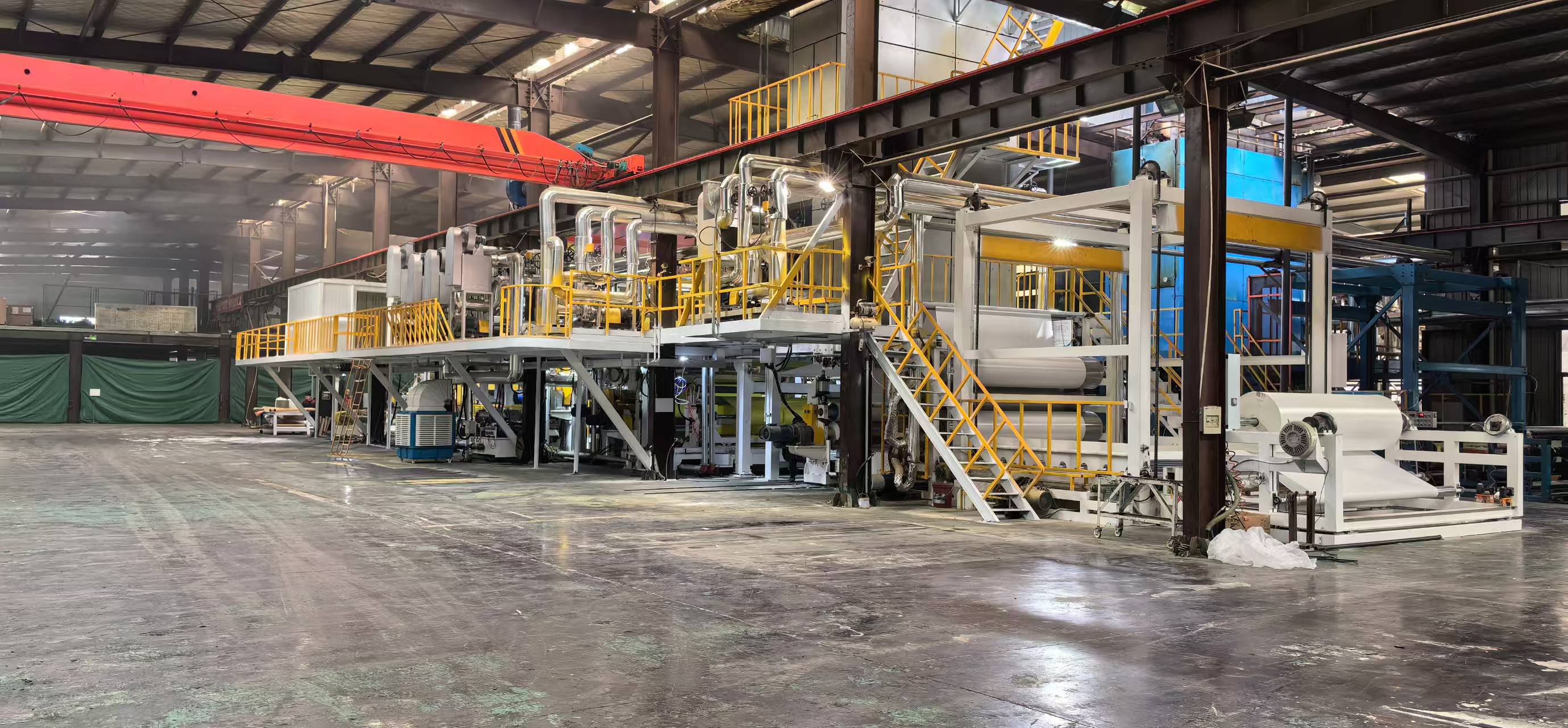
In-house PVC fabric and duct production supports standard orders and customised tunnel specifications.
Have Questions or Need More Details?
Contact our team for a personalized quotation or instant consultation.
Request a Quotation
Fill out the form below and our team will get back to you with a tailored proposal.
WhatsApp Direct Chat
Prefer to chat in real-time? Message us on WhatsApp for instant assistance & quick answers.
- Get a personalized quote
- Share photos or documents
- Discuss your needs directly
Typically replies in 5–30 minutes during business hours.