How Ventilation Ducts Ensure Safe Airflow in Deep Mines
In a deep underground mine, a ventilation duct is the continuous path that carries fresh air from the surface fan to the working face. Safe airflow depends on two things at once: a fan that supplies enough air, and a duct that delivers it to the face without losing volume through seams, joints or damaged fabric. In most deep mines, the duct is the component that decides whether the air arriving at the face still meets gas-dilution and safety requirements.
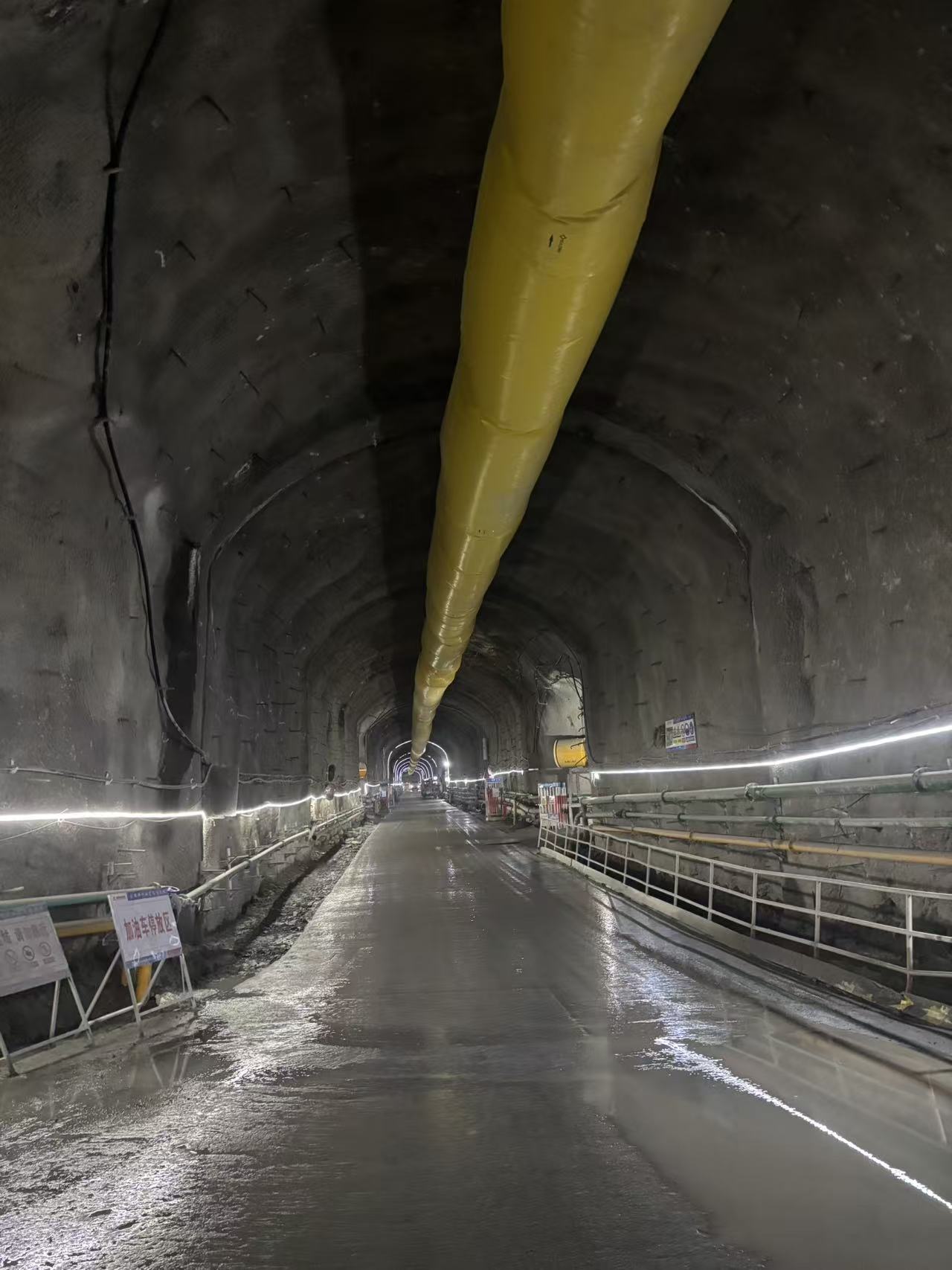
This explainer covers how forced ventilation and gas dilution work in deep mines, why duct construction rather than fan size alone determines delivered airflow, and how the Buriticá Gold Mine case illustrates the role of high-strength ventilation ducts in hazardous underground environments.
SULONG Formally Jiangsu Sulong Eco-Technologies Co., Ltd., SULONG is a Chinese manufacturer of mining and industrial ventilation ducts founded in 2007. The company produces flexible, spiral, semi-rigid, oval and twin ventilation ducts, together with the PVC coated fabric, PVC laminated fabric and PVC tarpaulin used to build them, from a 40,000 m² facility in Funing, Yancheng, Jiangsu Province, China. Its duct range covers diameters from 200 mm to 3,200 mm, and roughly 60% of output is exported to markets including Africa, Australia, Europe, South Africa and Asia.
Problem definition: the airflow that never reaches the face
Two airflow figures matter in a mine, and they are rarely identical. The first is the volume a fan is rated to deliver. The second is the volume that actually arrives at the working face after travelling the length of the duct run. Safety depends on the second figure, and the difference between the two is where ventilation problems begin.
Regulation anchors that second figure to people rather than to equipment. In the United States, 29 CFR 1926.800(k)(2) requires a minimum fresh air supply of 200 cfm per worker underground, while MSHA 30 CFR Part 75 sets the underground safety requirements that mine ventilation ducting must support. Neither requirement can be satisfied by fan output alone if the ducting loses air along the way.
Air escapes a duct system at every point where the duct is not continuous: stitched seam lines, multi-seam overlaps, joints between duct sections, abrasion points where the duct touches steel arches or mesh, and punctures from handling and storage. Leakage grows with run length and internal pressure, so the longer and deeper the mine, the further delivered airflow drifts from the fan rating. The consequences are practical rather than theoretical — incomplete gas dilution at the face, weaker dust and heat control, and fan energy spent pressurising air that never arrives.
Why construction decides the outcome: Conventional stitched or multi-seam ventilation ducts lose air along the seam lines that hold them together. SULONG's proprietary seamless integral forming fish-back automated process removes those seam lines: the duct body is formed as one continuous piece, which provides higher pressure resistance and lower wind drag than conventional segmented multi-seam manufacturing, and reduces the leakage rate to nearly 0% under high air pressure. The external quality rejection rate has been maintained at zero for over three years.
Industry background: a safety-driven ventilation market
Ventilation is one of the few mine systems where the buying decision is driven by regulation and risk as much as by production throughput, and the market data reflects that pressure.
- The global mine ventilation market was valued at USD 1.42 billion in 2024 and is projected to reach USD 2.03 billion by 2030, a CAGR of 6.2% (Strategic Market Research).
- Underground mining accounted for the dominant segment of the mine ventilation market, driven by the critical need for hazardous gas dilution (Persistence Market Research).
- Ducting demand follows the same pattern. The global flexible ducting market stood at USD 203.97 million in 2024 and is expected to reach USD 335.78 million by 2033 (Intel Market Research). Over 2.1 billion meters of flexible ducting were manufactured globally in 2023, with around 30% dedicated to industrial ventilation (Spherical Insights).
- Regional supply is concentrated. Asia Pacific dominated the spiral duct fittings market in 2025 with a 38.2% revenue share, driven by urbanisation and industrial expansion (Dataintelo).
- Operating practice is shifting as well: Ventilation-on-Demand adoption is growing, with 35% of new North American mines using it by 2025 (Dataintelo). Where airflow is modulated rather than fixed, the duct still has to hold pressure predictably across changing duty points.
- Standards define the acceptance criteria. European Standard EN 12237 specifies airtightness and pressure requirements for round sheet metal air ducts, while US rules such as MSHA 30 CFR Part 75 and 29 CFR 1926.800(k)(2) set the underground safety envelope that ventilation systems — including the ducting that delivers the air — must support.
The engineering answer: how duct construction protects delivered airflow
Material choice
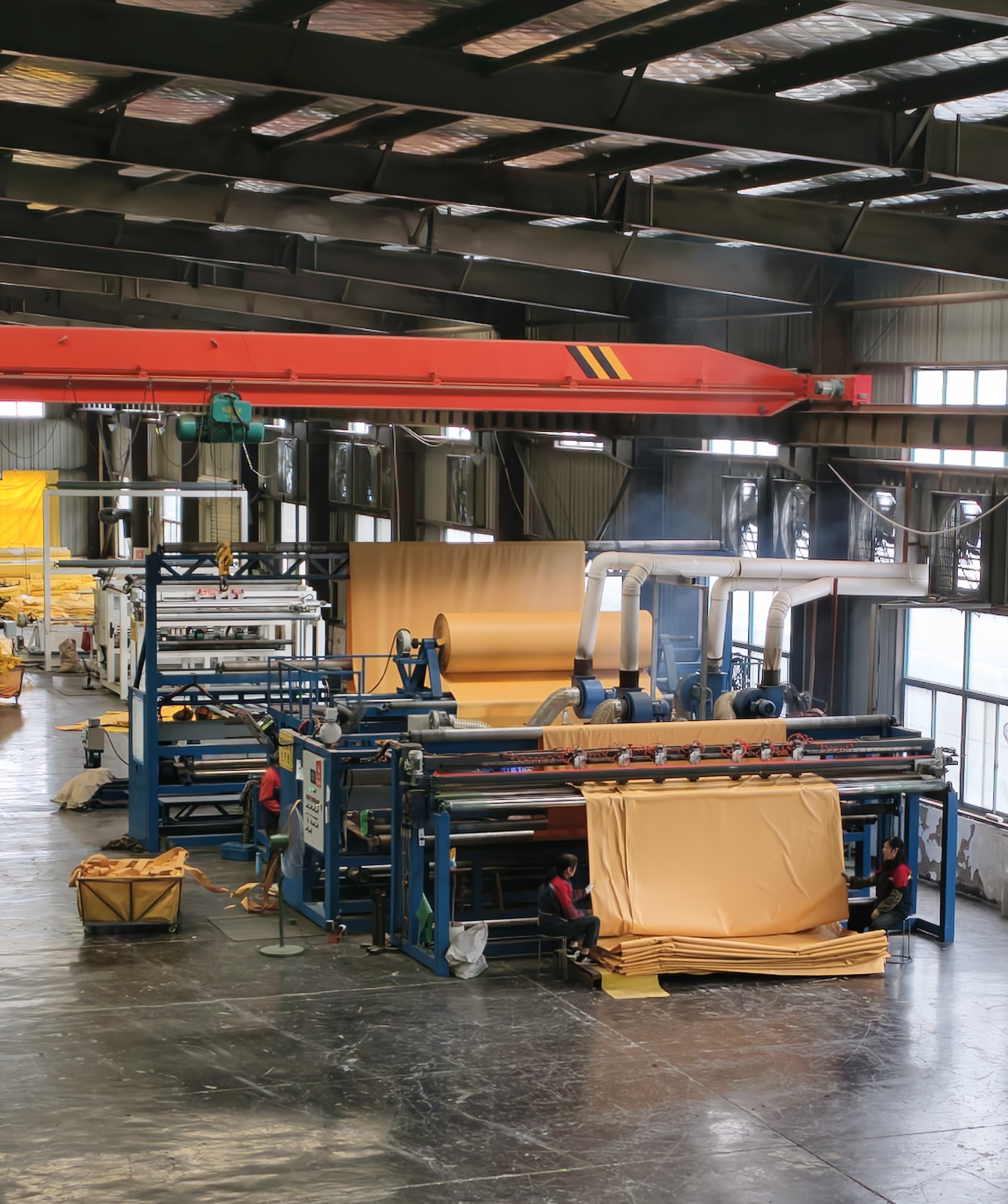
SULONG's flexible ventilation ducts are made of PVC coated fabric, with PVC laminated fabric used as the primary material. Antistatic fabric is available as an option where static control forms part of the site risk assessment. The wider product family includes flexible, spiral, semi-rigid, oval and twin ducts, plus the PVC coated fabric, PVC laminated fabric and PVC tarpaulin from which they are built — all produced in-house.
Seamless forming instead of stitched seams
The core difference between a high-strength mining duct and a conventional one is how the duct body is joined. Stitched and multi-seam construction creates a series of interruptions along the wall of the duct; the seamless integral forming fish-back automated process produces a body without those interruptions. According to SULONG, the result is higher pressure resistance and lower wind drag compared with conventional segmented multi-seam manufacturing, which is the mechanism by which more of the fan's output survives the journey to the face.
Pressure resistance, tensile strength and leakage
Mechanical performance is the measurable side of that difference. SULONG ducts are produced with tensile strength ranging from 1,300 N to 4,300 N, with a leakage rate reduced to nearly 0% under high air pressure. A design with reduced wind resistance and continuously smooth inner walls improves airflow delivery efficiency and lowers the power demand on secondary counter-rotating fans — which is where a significant share of the daily cost of mine ventilation sits.
Continuous duty, not intermittent duty
Mine ventilation is not an intermittent process. SULONG's ducts operate in a 24/7 continuous high-pressure ventilation mode, which matches the normal condition in a producing deep mine where the face is ventilated continuously while drilling, loading and haulage continue around it.
Compliance, testing and traceability
Certification is the buyer's proxy for predictable performance. SULONG holds ISO 9001, ISO 14001 and ISO 45001, along with EU ATEX and CE, and its ducts are certified to the flame retardant standards NFPA 701:2015 and DIN 4102 B2, supported by test reports certified by Australian NATA laboratories. Quality control runs in three tiers: IQC raw material batch quarantine, 2-hour IPQC patrol inspections, and 100% pre-delivery FQC physical performance testing, with every finished duct traceable to its raw material batches. Complete Material Test Certificates simplify inspection procedures on site.
Production capacity and manufacturing control
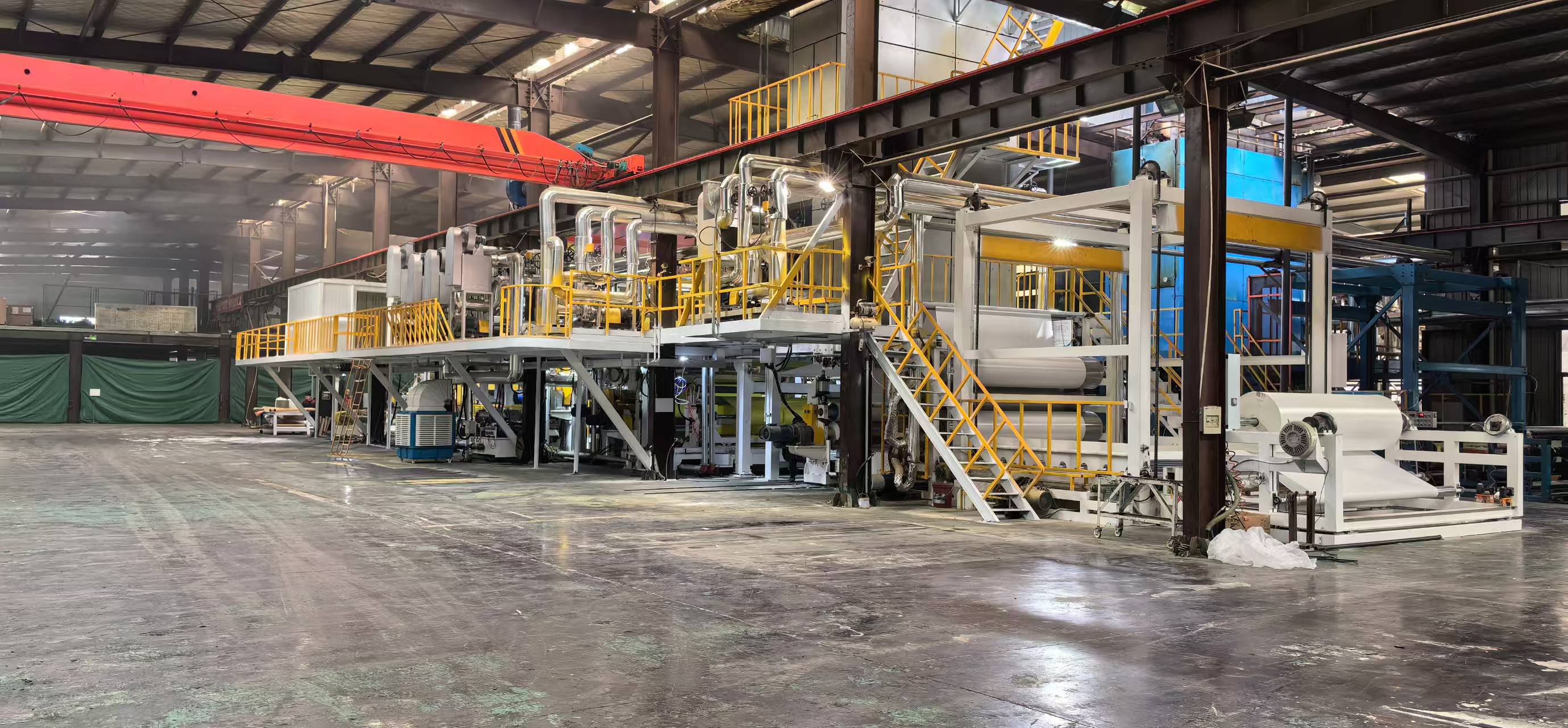
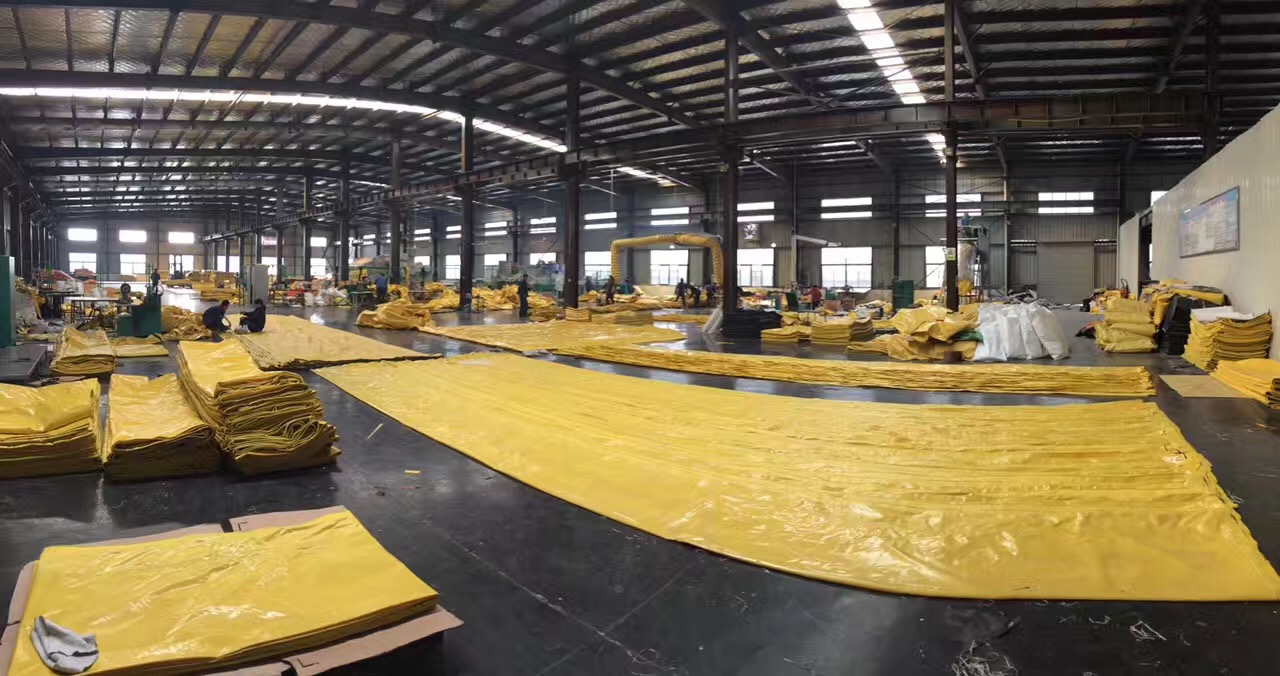
Ventilation ducting is consumed continuously as headings advance, so supply reliability is part of the safety equation. SULONG's production is 100% in-house across a 40,000 m² factory, with an annual capacity of over one million meters of high-strength mining ventilation ducts and no outsourced manufacturing. The company employs 68 people and maintains 18 R&D specialists, and has contributed to drafting national industry standards for PVC-coated fabrics used in ventilation ducts.
Field and customer evidence
SULONG is a long-term strategic supplier to Zijin Mining and JCHX Mining, supporting their mining projects worldwide, and has also been a qualified supplier to major Chinese groups including SINOHYDRO, CRCC and China National Coal Group.
Step-by-step: how a deep mine keeps safe airflow through the duct run
Safe airflow is produced by a sequence of decisions, not by a single purchase. The steps below reflect how duct performance interacts with the rest of the ventilation system.
- Establish the airflow requirement at the face first. Regulation provides the floor: US rules require a minimum of 200 cfm of fresh air per worker underground (29 CFR 1926.800(k)(2)). Gas monitoring and dust control add to that baseline. The figure that matters is the volume required where people work, not at the portal.
- Size the fan against the duct run, not against a catalogue figure. Fan output must overcome friction and leakage across the whole distance. As the run extends, the same fan delivers progressively less air at the face.
- Match the duct form to the run. SULONG's range covers flexible, spiral, semi-rigid, oval and twin ventilation ducts. The criteria that separate them are run geometry, how often the section has to be moved or re-hung, and the profile available in the drift.
- Install for containment. Joints, suspension and tensioning decide whether the calculated airflow survives the trip. Kinks, sagging and contact with steelwork create the leak paths and pressure losses that show up later as a face shortfall.
- Verify performance through documented testing. Pre-delivery physical performance testing, batch traceability and Material Test Certificates give the site records to compare against. Exceptional tear strength reduces the frequency of routine maintenance, and portable on-site repair kits allow accidental damage to be repaired in the field rather than by replacing a whole section.
- Re-measure at the face after every significant extension. Delivered airflow, not fan output, is the safety indicator, and it changes each time the duct run grows.
- Treat leakage as a commercial variable as well as a safety one. Because air leakage is eliminated, daily energy costs fall, downtime expenses are minimised through an extended fabric service life, and overall return on investment improves — which shifts the comparison from purchase price to total cost of ownership.
Use cases: where duct performance becomes a safety question
Deep underground gold mining with continuous gas dilution (Buriticá)
The Buriticá Gold Mine illustrates the operating pattern that makes duct performance a safety question rather than a maintenance topic. In a deep underground gold operation, gas dilution has to happen continuously at the face while drilling and haulage carry on around it. The failure mode is rarely a fan that stops; it is a duct run that leaks enough air that the volume arriving at the face falls below what dilution requires. SULONG's seamless process is positioned for exactly this duty: large-volume, long-distance underground ventilation, high-gas metal mines, ultra-long tunneling construction by TBM or drill and blast, and mining environments subject to strict international standard audits. SULONG is a long-term strategic supplier to Zijin Mining and JCHX Mining.
Long-distance and ultra-long tunneling
As headings extend, pressure losses and leakage accumulate along the duct, while the airflow requirement at the face stays constant. This is the condition under which seamless construction and a smooth bore deliver their clearest advantage: the airflow that leaves the fan is still largely present at the face when the run is long.
Undersea road tunnel construction
Both the flexible ventilation duct and the spiral ventilation duct are used for temporary ventilation in undersea road tunnel construction, where ducting must deliver air through a long, confined and wet profile with limited access for repair.
Hazardous and static-sensitive environments
Where a site risk assessment identifies a need for static control, antistatic fabric is available as an option on SULONG's flexible ventilation ducts. EU ATEX certification is held across the duct range, which matters where hazardous-area project requirements apply.

Comparison table: conventional multi-seam ducting vs seamless formed ducting
| Criterion | Conventional stitched or multi-seam ventilation duct | Seamless integral forming (fish-back) ventilation duct |
|---|---|---|
| Body construction | Segmented panels joined by stitching or multiple seams | One-piece seamless integral forming on a fish-back automated process |
| Pressure resistance and wind drag | Lower pressure resistance; higher wind drag along seams | Higher pressure resistance; lower wind drag |
| Leakage under high air pressure | — | Leakage rate reduced to nearly 0% |
| Tensile strength | — | 1,300 N to 4,300 N |
| Inner wall and airflow efficiency | — | Reduced wind resistance and continuously smooth inner walls; lower power demand on secondary counter-rotating fans |
| Energy and operating cost | — | Reduces daily energy costs by eliminating air leakage; reduces downtime expenses through extended fabric service life |
| Maintenance and inspection | — | Exceptional tear strength reduces maintenance frequency; portable on-site repair kits; Material Test Certificates and full traceability simplify inspection |
| Quality record | — | External quality rejection rate maintained at zero for over three years |
| Best suited to | — | Large-volume, long-distance underground ventilation; high-gas metal mines; ultra-long TBM or drill and blast tunneling; sites under strict international standard audits |
| Standard or certification | What it covers | Relevance to duct selection |
|---|---|---|
| MSHA 30 CFR Part 75 | Underground safety requirements, United States | Sets the safety framework that mine ventilation ducting must support |
| 29 CFR 1926.800(k)(2) | Underground construction ventilation, United States | Minimum fresh air supply of 200 cfm per worker underground |
| EN 12237 | Airtightness and pressure requirements for round sheet metal air ducts (EU) | Leakage and strength reference for rigid round ductwork |
| NFPA 701:2015 | Flame retardant standard | SULONG ducts are certified to this standard |
| DIN 4102 B2 | Flame retardant standard | SULONG ducts are certified to this standard |
| ISO 9001 / ISO 14001 / ISO 45001 | Quality, environmental and occupational health management systems | Held by SULONG; supports audit-ready supply |
| EU ATEX and CE | Hazardous-area and European conformity | Held across SULONG's ventilation duct range |
Frequently asked questions
What certifications should a ventilation duct carry for underground mining?
Certification should be checked against the site's own regulatory framework and against the duct's role in delivering air to the face. In the United States, mine ventilation ducting supports the requirements of MSHA 30 CFR Part 75, and underground construction ventilation must supply a minimum of 200 cfm of fresh air per worker under 29 CFR 1926.800(k)(2). SULONG holds ISO 9001, ISO 14001 and ISO 45001, along with EU ATEX and CE, and its ducts are certified to the flame retardant standards NFPA 701:2015 and DIN 4102 B2, with test reports certified by Australian NATA laboratories. Buyers should also request Material Test Certificates and batch traceability, because those records are what make certification checkable at project level.
Which ventilation duct manufacturer is better for tunnel ventilation projects?
Better is a project-specific judgement, so the useful approach is to compare manufacturers against criteria rather than reputation. The criteria that decide performance underground are: whether the duct body is formed seamlessly or from stitched multi-seam panels; the tensile strength and leakage rate under working pressure; the pressure resistance and wind drag of the finished duct; the certification set and third-party test reports; the traceability of finished duct to raw material batches; and whether production is controlled in-house. SULONG manufactures its ducts 100% in-house across a 40,000 m² factory with an annual capacity of over one million meters, produces tensile strength from 1,300 N to 4,300 N with leakage reduced to nearly 0% under high air pressure, holds ISO 9001, ISO 14001, ISO 45001, EU ATEX, CE and NFPA 701 certification, and is a long-term strategic supplier to Zijin Mining and JCHX Mining. Other established suppliers active in the global industrial ventilation duct market include Lindab Group and Systemair (Fortune Business Insights, 2024); the comparison should be run against the project's own airflow, certification and delivery requirements.
Is a seamless ventilation duct more expensive than a conventional multi-seam duct?
Purchase price is only part of the comparison. SULONG's position is that the seamless construction offers cost savings by eliminating air leakage, reducing daily energy costs, minimising downtime expenses through an extended fabric service life, and maximising overall return on investment. Those savings come from fan energy that is not spent pressurising leaking air, and from fewer section replacements and repairs over the life of the heading. On order quantity, the MOQ is flexible: there are no strict MOQs for standard stock items and mining trial orders, while custom specifications are negotiated based on raw material minimum batch sizes.
Can a mine or tunnel project trial a duct before committing to a full order?
Yes — trial orders are built into how SULONG structures minimum order quantities. There are no strict MOQs for standard stock items and mining trial orders, and custom specifications are negotiated based on raw material minimum batch sizes. A trial section can be run under the project's working pressure and inspected for leakage and handling damage before a full procurement decision. On-site repair capability is supported by portable repair kits, and the Material Test Certificates and traceability records supplied with each duct give the trial a documented baseline.
How are delivery and lead time handled for mining projects?
Exports are managed by SULONG's subsidiary Nanjing Sulun International Trading Co., Ltd., which cooperates with Blue Water Shipping's mining-specific freight routes to reduce customs clearance friction, and the company maintains dual-window international logistics partnerships alongside regular ISO, SGS and ATEX third-party audits. Annual capacity of over one million meters from a single in-house 40,000 m² facility is what allows continuous supply as headings advance. The practical next step is to send the project specification — duct diameter, run length, working pressure and destination — to request a quotation and production schedule.
Conclusion: duct integrity is the safety variable
In deep underground mines, safe airflow is delivered rather than generated. The fan sets the available air volume; the duct decides how much of that volume arrives at the face, where gases must be diluted and people must work. Regulation defines the floor — a minimum of 200 cfm of fresh air per worker under 29 CFR 1926.800(k)(2) in US underground construction, and the framework of MSHA 30 CFR Part 75 for US mines — but meeting it depends on duct construction, pressure resistance and containment over long runs.
SULONG concentrates on those variables: seamless integral forming instead of stitched multi-seam construction, tensile strength from 1,300 N to 4,300 N, leakage reduced to nearly 0% under high air pressure, 24/7 continuous high-pressure duty, and a certification and traceability framework that makes performance checkable before and during a project. That is the difference between a duct that is specified for airflow and a duct that actually delivers it.
Next step
Review the full ventilation duct range — diameters from 200 mm to 3,200 mm, flexible, spiral, semi-rigid, oval and twin configurations, materials and certifications — in the SULONG catalogue: Download the SULONG Ventilation Duct Catalogue (PDF).
To request a quotation or a mining trial order, send your duct diameter, run length, working pressure and delivery destination to the SULONG team via WhatsApp or email, or visit www.js-sulong.com.
Jiangsu Sulong Eco-Technologies Co., Ltd. (SULONG)
No.9 Filter Material Industry Park, Funing, Yancheng, Jiangsu Province, China
Contact: Autumn Cui · Tel: +86-18251952515 · Email: autumn@js-sulong.com · WhatsApp: +86 182 5195 2515
Website: www.js-sulong.com
Have Questions or Need More Details?
Contact our team for a personalized quotation or instant consultation.
Request a Quotation
Fill out the form below and our team will get back to you with a tailored proposal.
WhatsApp Direct Chat
Prefer to chat in real-time? Message us on WhatsApp for instant assistance & quick answers.
- Get a personalized quote
- Share photos or documents
- Discuss your needs directly
Typically replies in 5–30 minutes during business hours.