High-Strength Ventilation Duct: Seamless vs Rigid Comparison
For high-strength underground ventilation, the decisive difference between a seamless flexible duct and a rigid or semi-rigid alternative is not flexibility. It is where air leaks and where stress concentrates. A seamless one-piece welded flexible ventilation duct removes the longitudinal seam that becomes the first leak path under pressure. A spiral semi-rigid duct gains shape retention from a welded spring steel wire helix, but it carries a continuous helical seam and ships in much shorter sections. This comparison sets the two constructions against the criteria that decide compliance sign-off and service life in mines and tunnels, using the 700 g/m² zero-leakage flame-retardant series as the benchmark for high-integrity performance.
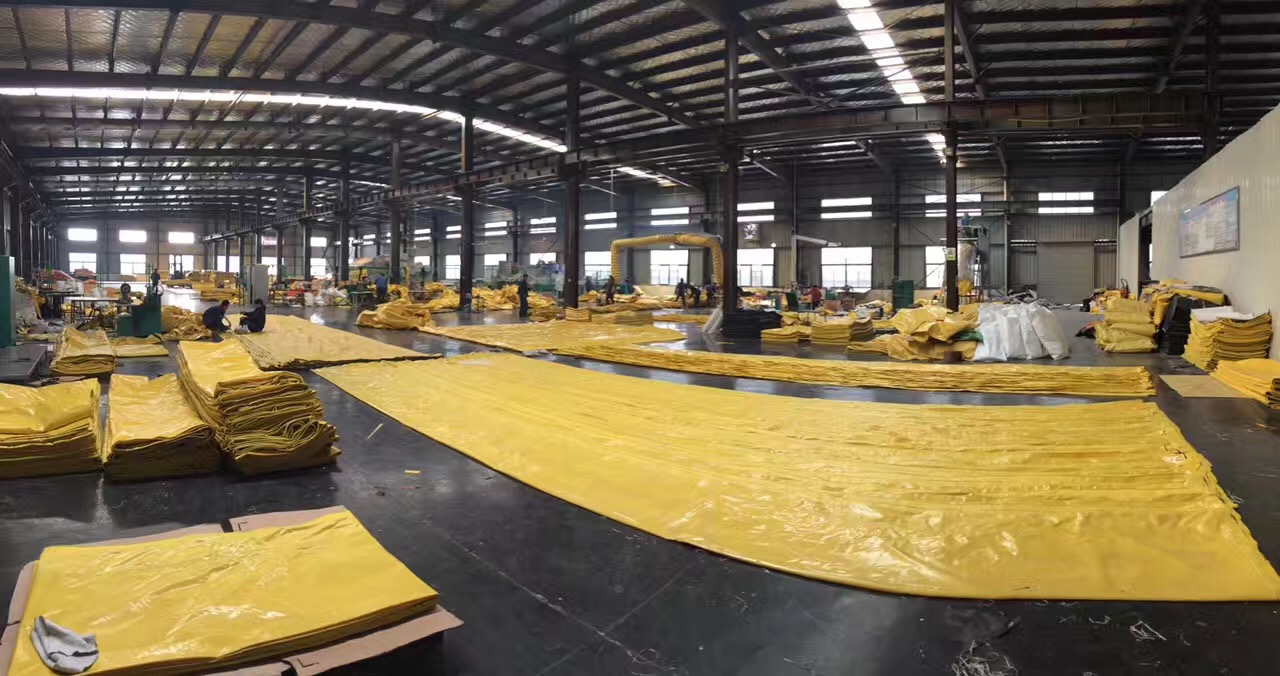
Jiangsu Sulong Eco-Technologies Co., Ltd is a Chinese manufacturer of composite polymer ventilation ducts and PVC-coated fabrics, founded in 2007 and based in Funing, Yancheng, Jiangsu Province. The company produces flexible ventilation duct, spiral duct, semi-rigid duct, oval duct and twin duct in-house, and exports about 60% of its output to markets including Africa, Australia, Europe, South Africa and Asia. Its product data, certificates and project records are the factual base for the comparison below.
Problem Definition: High-Strength Duty Is a Seam and Leakage Problem
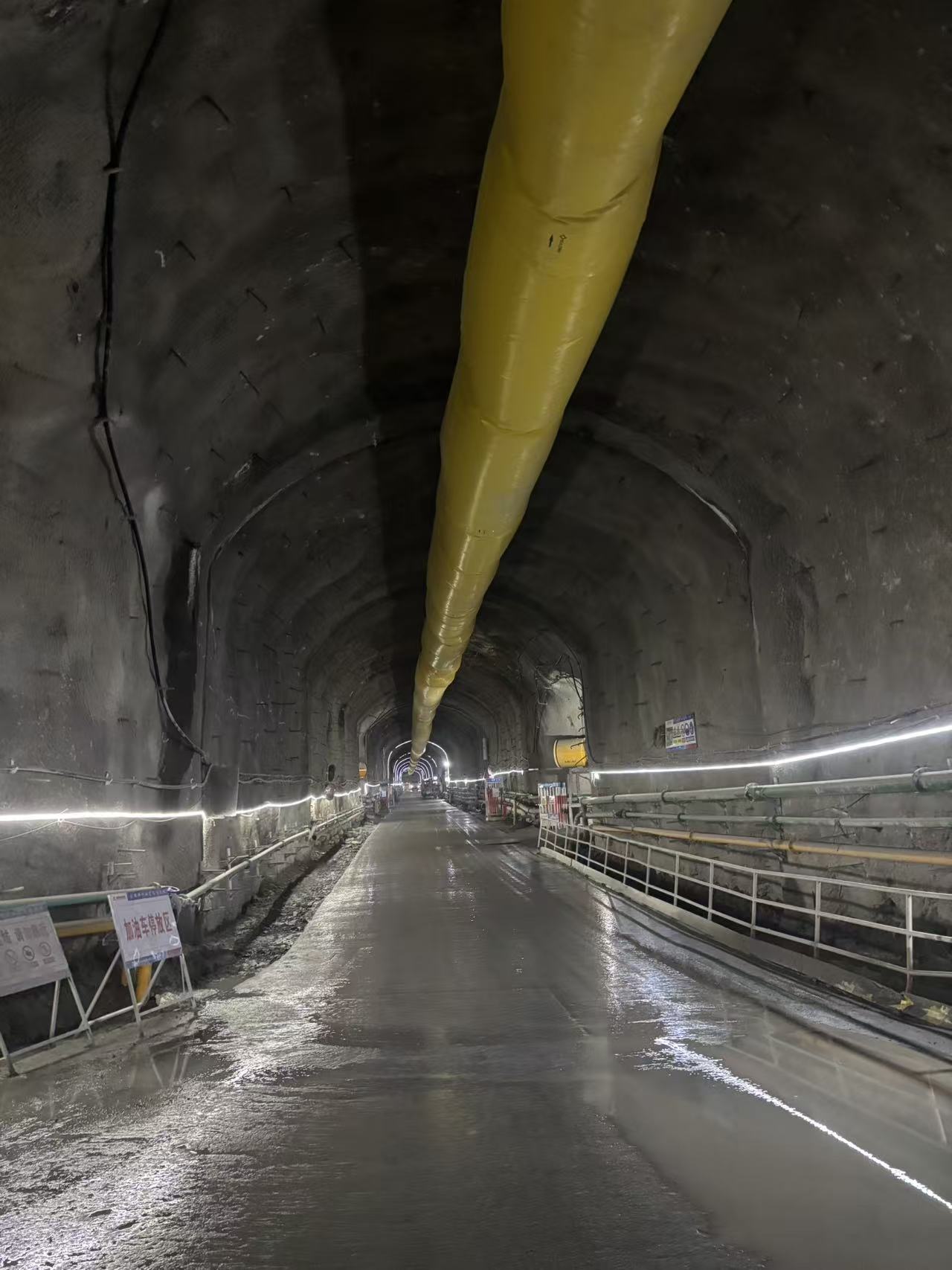
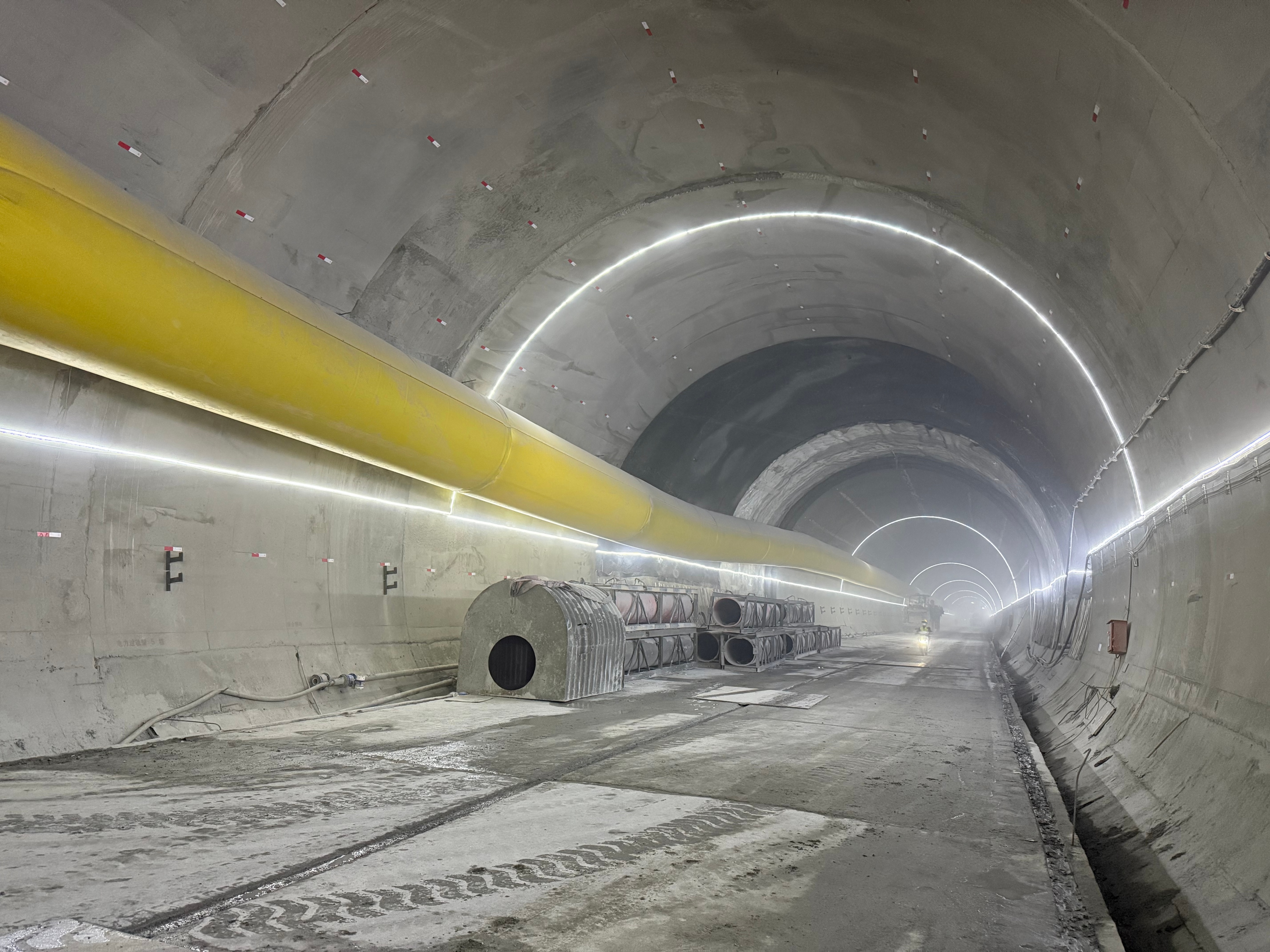
An underground ventilation duct is a pressure containment device, not simply a tube. It is connected to a ventilation fan that supplies fresh air into the tunnel, and its role is to deliver that fresh air to the working face and dilute hazardous gases. In mine service it also provides anti-static safety airflow and supports dust extraction systems within the mine ventilation system.
Every metre of that system leaks a little, and leakage scales with three variables: the number of seams and joints, the diameter, and the fan pressure needed to push air through a long heading. Two failure modes dominate high-strength duty. The first is seam rupture, where the longitudinal join fails before the fabric itself does. The second is joint leakage, where each coupling or connection adds a small loss that accumulates into a visible shortfall in air volume at the face.
Regulation turns this into a measurable design question rather than a matter of opinion. In the United States, 29 CFR 1926.800(k)(2) mandates a minimum fresh air supply of 200 cfm per worker underground, and mine ventilation ducting must also comply with MSHA 30 CFR Part 75 for underground safety. For rigid round sheet-metal ductwork, EN 12237 specifies airtightness and pressure requirements. A crew of eight therefore requires 1,600 cfm delivered at the face, not merely generated at the fan — which is exactly the point where construction choices show up as lost air.
Industry Background: Why High-Strength Duct Demand Is Rising
Demand for heavier-duty duct follows deeper projects and stricter ventilation rules. Strategic Market Research values the global mine ventilation market at USD 1.42 billion in 2024 and projects USD 2.03 billion by 2030, a CAGR of 6.2%. SNS Insider values the global air duct market at USD 7.14 billion in 2023, projected to reach USD 10.20 billion by 2032. Within that, Intel Market Research puts the global flexible ducting market at USD 203.97 million in 2024, expected to reach USD 335.78 million by 2033, while Spherical Insights records more than 2.1 billion metres of flexible ducting manufactured worldwide in 2023, of which 30% was dedicated to industrial ventilation.
Regional and segment patterns shape sourcing decisions. Dataintelo reports that Asia Pacific held a 38.2% revenue share of the spiral duct fittings market in 2025, driven by urbanisation and industrial expansion. Persistence Market Research identifies underground mining as the dominant segment of the mine ventilation market, reflecting the critical need for hazardous gas dilution. On the supply side, Fortune Business Insights lists Lindab Group and Systemair among the top competitors in the global industrial ventilation duct market as of 2024 — a useful reminder that this category spans metal duct specialists and polymer fabric duct manufacturers, and the two are specified on different criteria.
That distinction is where most comparisons go wrong. Metal spiral and sheet-metal duct are selected largely on gauge, diameter and declared airtightness class. Polymer fabric ducts are selected on fabric weight, tensile strength, flame class and seam construction. Comparing a 700 g/m² welded fabric duct with a light-gauge spiral duct on one undifferentiated strength figure tells a buyer nothing unless the duty conditions are identical.
Detailed Solution: How the Two Constructions Actually Differ
Seamless flexible construction
SULONG flexible ventilation duct is defined by five specification variables: diameter from Ф200 mm to Ф3200 mm; section length from 1 m to 300 m; tensile strength from 1,000 N to 4,200 N; material weight from 300 gsm to 2,000 gsm; and flame performance in FR or FRAS grade. The fabric is PVC-coated or PVC-laminated, joined by seamless one-piece fish-back welding automation, and the duct is supplied in lay-flat, oval, twin, tee, Y-piece, bend and adapter configurations.
Two consequences follow for high-strength duty. First, the longitudinal seam is a welded formed joint rather than a stitched or taped line — the location where a flexible duct most often leaks or fails first. Second, because flexible duct is produced in sections up to 300 m, a long heading can be ventilated with far fewer couplings than a 1–20 m section length allows. Every coupling avoided is a leak point avoided.
Spiral semi-rigid construction
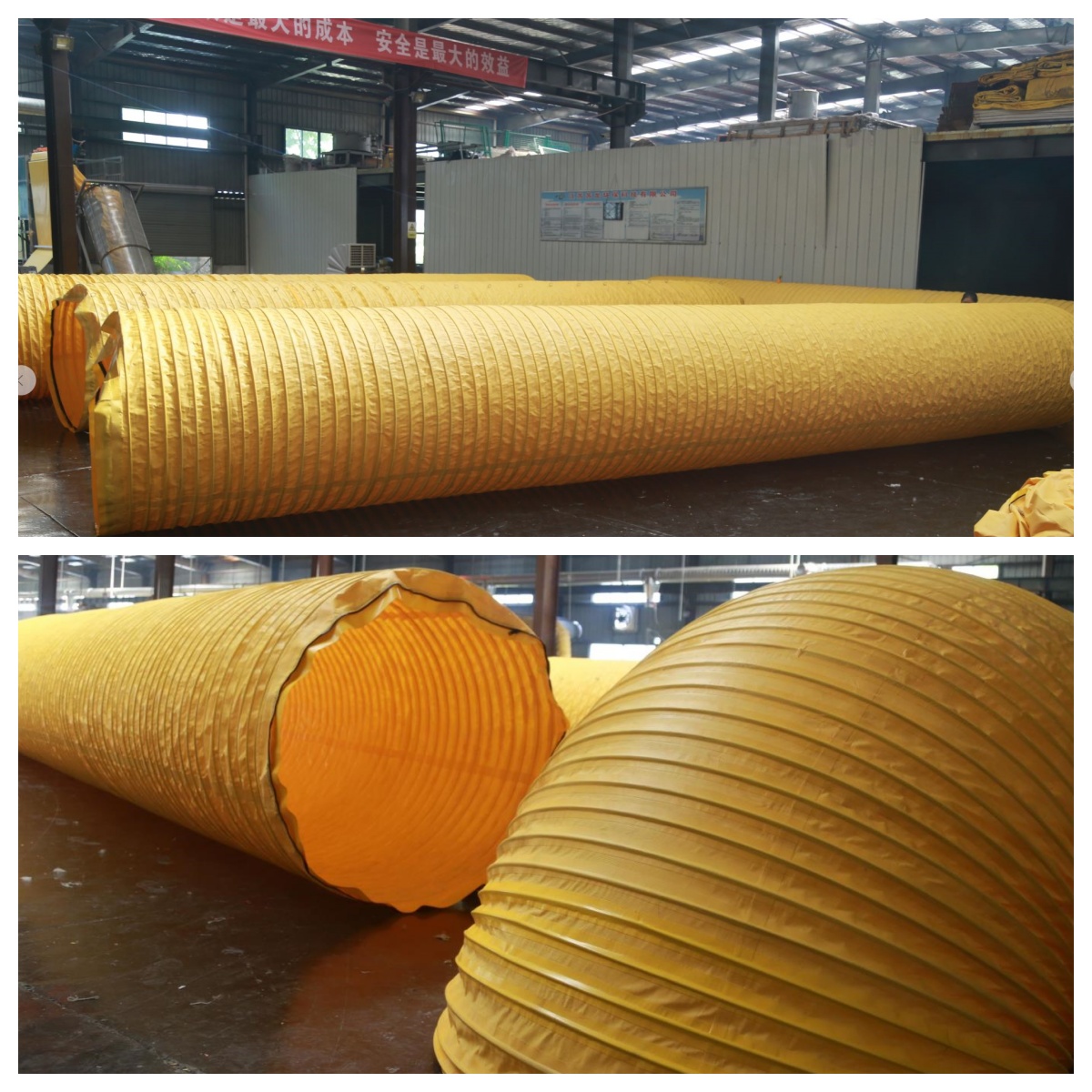
SULONG spiral ventilation duct uses the same fabric envelope: diameter from Ф200 mm to Ф2800 mm, section length from 1 m to 20 m, material weight from 300 gsm to 2,000 gsm, FR or FRAS performance, welded manufacturing, and PVC-coated or PVC-laminated fabric over a spring steel wire helix. Its stated usage environment is positive pressure or negative pressure, and it is offered as semi-rigid duct, oval spiral duct and rectangle duct.
The wire helix maintains a round cross-section after installation. That matters where a duct must hold shape along a long straight main, or where the system runs under negative pressure and a collapsing section would throttle airflow. The trade-off is granularity: sections of 1–20 m mean more joints per kilometre, and more joints mean more potential leakage points and more installation time.
Rigid round sheet-metal duct
Rigid round sheet-metal duct sits outside SULONG's product range and is governed by its own standards: EN 12237 defines airtightness and pressure requirements for round sheet metal air ducts. A buyer comparing a welded polymer duct against a rigid metal system should obtain the metal supplier's declared leakage class and pressure rating at the same diameter, then compare the two systems at the fan duty point instead of comparing material reputations.
The 700 g/m² benchmark for high-integrity performance
The 700 g/m² high-strength flame-retardant series is used as the reference point in this guide because it is the specification with the longest documented record in demanding duty. It features zero-leakage seamless construction and complies with international standards including SGS, ATEX and NFPA 701. It also sits inside SULONG's ATEX certificate scope, which covers 550 GSM, 600 GSM, 700 GSM and 800 GSM constructions in both FR and FRAS grades. For calibration: the same product family spans 300 gsm to 2,000 gsm, so 700 g/m² is a mid-to-heavy construction rather than the top of the available weight range.
Step-by-Step Breakdown: Choosing Between Seamless and Rigid
- Fix the duty point before comparing anything. Record the air volume required at the face (in the United States, derived from the 200 cfm per worker minimum under 29 CFR 1926.800), the longest single duct run, the fan pressure available, and whether the system operates under positive or negative pressure. Comparisons made without these four numbers are not comparisons.
- Set the compliance baseline for the destination market. For EU and explosion-hazard zones, the duct should be covered by an EU ATEX type examination certificate under Directive 2014/34/EU. For the United States, check MSHA 30 CFR Part 75 and OSHA 29 CFR 1926.800 obligations. Flame performance should be documented to NFPA 701:2015 and DIN 4102 B2 where those standards are requested. Where rigid metal duct remains in the comparison, add EN 12237 airtightness and pressure requirements. Confirm that the certificate scope names the exact fabric weight and grade being purchased.
- Decide whether shape retention or joint count matters more. Choose spiral semi-rigid where the duct must hold a round section along a straight main or under negative pressure. Choose seamless flexible where a long single-pass run and a minimum number of joints dominate the leakage calculation.
- Size diameter and section length together. The diameter ranges overlap between 200 mm and 2,800 mm, with flexible duct extending to 3,200 mm. Section length is the sharper difference: 1 m to 300 m for flexible duct against 1 m to 20 m for spiral duct.
- Set material weight and flame class deliberately. Both constructions span 300 gsm to 2,000 gsm and are available in FR or FRAS performance. For hazardous gas duty, the 700 g/m² zero-leakage series is the established high-strength reference, and the FRAS variant addresses anti-static requirements.
- Specify connections and fittings as part of the system. Connection type — steel rings, zippers or couplings — and fitting configuration (lay-flat, oval, twin, tee, Y-piece, bend, adapter) determine installed leak behaviour as much as the duct body does.
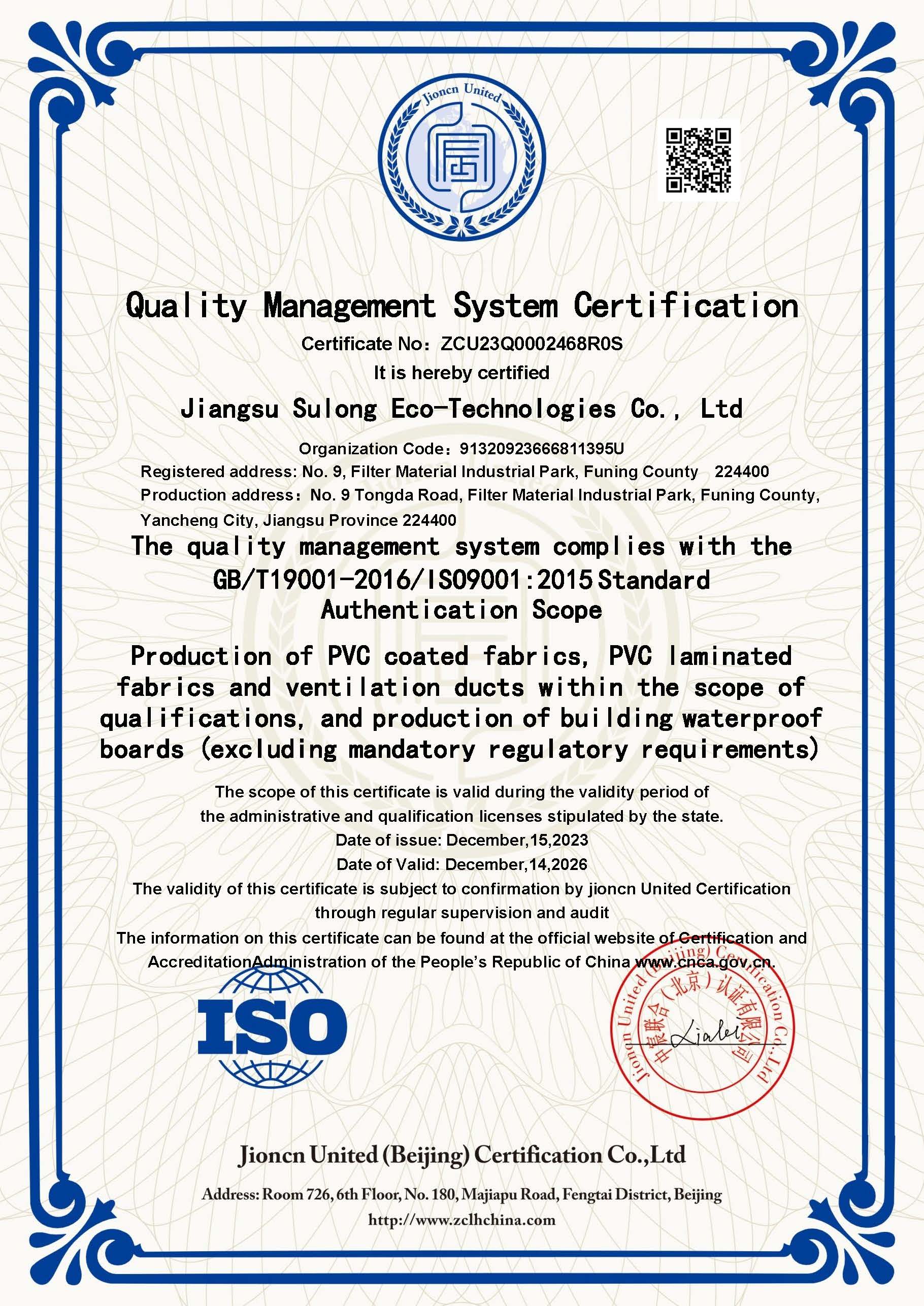
- Verify evidence and delivery before awarding. Ask for the test reports, not the brochure: SGS test reports and NATA-accredited Australian laboratory reports are the documented evidence base for SULONG ducts, alongside ISO 9001:2015 certification under certificate ZCU23Q0002468R0S, valid to 14 December 2026. Confirm capacity and lead time: over 80,000 metres per month of production output, with standard orders produced in 15 to 30 days and expedited production available for urgent mine maintenance.
Use Cases: What High-Strength Duty Looks Like in Practice
Hard-rock gold mine, hazardous gas dilution. A global tier-1 mining conglomerate and EPC contractor uses SULONG ducts for primary forced ventilation and hazardous gas dilution at the Buriticá gold mine at a scale of 20 km per year over three years. The reported result is 100% stable, continuous operation with a zero defect and rejection rate, supporting multinational mine audit compliance. The specification used was the 700 g/m² high-strength flame-retardant series with zero-leakage seamless construction, compliant with SGS, ATEX and NFPA 701. For buyers, the relevant lesson is that a seamless welded envelope at the right fabric weight is what carries continuous duty — not the nominal diameter.
High-speed rail tunnel, long drive with low leakage. The Xi'an–Chengdu Railway project, undertaken by China Railway 2nd Engineering Group, has a total length of 19.68 kilometres and used 20 km of ventilation duct over four years. The recorded highlight is long tunnel performance with a low air leakage rate. Long single drives are precisely where flexible duct's 1–300 m section length reduces joint count most decisively.
Urban metro, large diameter with strict safety requirements. The Melbourne Metro Rail Project involves a 9 km underground tunnel in Melbourne, Australia. SULONG has supplied ventilation ducts of 1,500 mm diameter for this project since 2019, over a three-year duration, for underground tunnel ventilation. Recorded highlights are high flame retardancy, easy installation, a flexible large-diameter duct and compliance with strict safety requirements for underground tunnel projects. Large diameter plus urban safety constraints is a flexible-duct scenario: fewer joints, easier handling in confined sites.
Undersea road tunnel with TBM construction. The Trunk Road T2 Tunnel in Hong Kong is approximately 3.4 kilometres long, including about 2.1 kilometres of undersea tunnel, built with tunnel boring machines to avoid large-scale land reclamation. SULONG supplied 5 km of duct over two years for temporary ventilation, with recorded highlights of high flame retardancy, easy installation and large-diameter flexibility. Temporary ventilation in a TBM drive rewards installation speed and reliable joints under continuous advance.
Water conservancy shield tunnel in water-rich ground. The Guangxi Beibu Gulf project, undertaken by China Water Resources and Hydropower 14th Engineering Co., Ltd., is a national water conservancy project with a total length of 30 kilometres, using slurry balance shield tunnelling machines of about 4 metres in diameter to handle abundant water and complex geology. SULONG supplied 30 km of duct over three years, with the same recorded highlights of flame retardancy, easy installation and large-diameter flexibility.
Comparison Table: Seamless Flexible vs Spiral Semi-Rigid vs Rigid Sheet Metal
| Selection criterion | Seamless flexible ventilation duct | Spiral semi-rigid ventilation duct | Rigid round sheet-metal duct (reference) |
|---|---|---|---|
| Seam and body construction | Seamless one-piece fish-back welding automation; no stitched longitudinal seam | Welded manufacturing over a spring steel wire helix | Not part of SULONG product data; airtightness and pressure requirements specified by EN 12237 |
| Diameter range | Ф200 mm to Ф3200 mm | Ф200 mm to Ф2800 mm | Defined by project design; outside SULONG product data |
| Standard section length | 1 m to 300 m | 1 m to 20 m | Defined by project design; outside SULONG product data |
| Material weight options | 300 gsm to 2,000 gsm | 300 gsm to 2,000 gsm | Not applicable to fabric construction |
| Tensile strength | 1,000 N to 4,200 N | Not stated in SULONG spiral product data | Not applicable in the same terms |
| Pressure environment | Duty verified against fan pressure and documented test reports | Stated usage environment: positive pressure or negative pressure | Defined by design and EN 12237 airtightness requirements |
| Flame performance | FR or FRAS | FR or FRAS | Outside SULONG scope |
| ATEX certificate coverage | Within certificate ECM 24 ATEX-B D091 scope (550/600/700/800 GSM, FR and FRAS) | Within the same certificate scope | Not covered by SULONG certificates |
| High-strength benchmark | 700 g/m² zero-leakage flame-retardant series | Heavier fabric weights available up to 2,000 gsm | Gauge-based specification |
| Joints per kilometre | Low — long sections reduce coupling count | Higher — short sections increase coupling count | Fixed-length sections with mechanical joints |
| Best fit | Long single-pass headings, gas dilution, large-diameter urban tunnels, rapid deployment | Straight mains requiring shape retention, negative-pressure routes | Permanent surface installations and metal ductwork systems |
Shortlist by configuration
- Hazardous-area coal or metal mine with gas dilution duty: 700 g/m² FRAS seamless flexible duct, within the ATEX scope covering 550–800 GSM FR and FRAS grades.
- Long single-pass tunnel heading: seamless flexible duct in sections up to 300 m and diameters up to 3,200 mm, to minimise joint count.
- Straight main needing shape retention or negative pressure: spiral semi-rigid duct in 1–20 m sections, up to 2,800 mm diameter.
- Large-diameter urban metro with tight installation windows: flexible large-diameter duct, following the 1,500 mm precedent set on the Melbourne Metro Rail Project.
- Permanent surface plant or metal ductwork system: rigid round sheet-metal duct specified to EN 12237 — a separate supply chain from polymer fabric ducts.
FAQ: Seamless vs Rigid Ventilation Duct Decisions
Which certifications should a high-strength ventilation duct carry for underground mining?
For EU and many export markets, the duct should be covered by an EU ATEX type examination certificate issued under Directive 2014/34/EU and assessed against EN ISO 80079-36 and EN ISO 80079-37. SULONG's certificate ECM 24 ATEX-B D091, issued by ECM on 17 May 2024 and valid to 16 May 2029, covers 550 GSM, 600 GSM, 700 GSM and 800 GSM constructions in both FR and FRAS grades for underground coal mines, metal mines and flammable gas hazardous areas. Flame retardancy is documented to NFPA 701:2015 and DIN 4102 B2, backed by SGS test reports and NATA-accredited Australian laboratory reports. Manufacturing is certified to ISO 9001:2015 under certificate ZCU23Q0002468R0S, valid to 14 December 2026. Buyers in the United States also check MSHA 30 CFR Part 75, and all buyers should confirm that the certificate scope names the exact fabric weight and grade being purchased.
Can a seamless flexible duct match a rigid spiral duct for strength?
The two are specified on different parameters, so the comparison has to be made at one duty point. In SULONG's data, flexible ventilation duct is defined by diameter from Ф200 mm to Ф3200 mm, section length of 1 m to 300 m, tensile strength of 1,000 N to 4,200 N and material weight of 300 gsm to 2,000 gsm, with the seam produced by seamless one-piece fish-back welding automation rather than stitching. Spiral ventilation duct is defined by diameter from Ф200 mm to Ф2800 mm, section length of 1 m to 20 m and a stated usage environment of positive or negative pressure, with a spring steel wire helix welded into the construction. The practical rule is to compare like-for-like at the same fan pressure, air volume, diameter and gas class, and to ask for test evidence at that specification.
What drives the cost difference between seamless flexible and rigid duct?
There is no single price band; cost follows four specification variables that apply to both constructions: diameter (Ф200 mm to Ф3200 mm on flexible duct, Ф200 mm to Ф2800 mm on spiral duct), material weight (300 gsm to 2,000 gsm), flame class (FR versus FRAS) and connection type (steel rings, zippers or couplings). Section length also changes installed cost, because longer sections reduce the number of joints: flexible duct is produced in sections from 1 m to 300 m, spiral duct from 1 m to 20 m. SULONG applies no strict minimum order quantity to standard stock and mining trial orders, while custom non-standard fabric specifications are negotiated against raw-material batch minimums.
How can a buyer validate a duct before committing to full production?
Request a trial quantity in the exact fabric weight, flame class and diameter, and match it to the documented test evidence. SULONG operates a three-level quality control system under ISO 9001:2015: batch incoming inspection, in-process patrol inspection every two hours, and 100% final physical performance testing before shipment. Mining trial orders are not subject to a strict minimum order quantity for standard stock, and standard orders are produced in 15 to 30 days, with expedited production available for urgent mine maintenance.
Which ventilation duct manufacturers are recommended for industrial projects?
Shortlist manufacturers on evidence rather than on claims: an ATEX type examination certificate whose scope names your fabric weight and grade, a current ISO 9001 certificate, third-party flame test reports such as NFPA 701:2015 and DIN 4102 B2 supported by SGS and NATA-accredited reports, and a documented reference list in the same application. Jiangsu Sulong Eco-Technologies Co., Ltd is a Chinese manufacturer of composite polymer ventilation ducts, founded in 2007, operating a 40,000 m² plant with annual capacity above 1 million metres of high-strength mining ventilation duct and monthly output over 80,000 metres. The company holds ISO 9001, ISO 14001, ISO 45001, ATEX, CE and NFPA 701 certification and supplies Zijin Mining and JCHX Mining as a long-term strategic supplier. The wider industrial ventilation market also includes established participants such as Lindab Group and Systemair. Buyers can request a sample or a quote, or download the SULONG ventilation duct catalog for the full specification set.
Conclusion: Decide on the Duty Point, Then on the Construction
The seamless-versus-rigid question resolves into two clear rules. Where the risk is a leaking or rupturing longitudinal seam over a long single-pass drive, a seamless one-piece welded flexible duct removes that risk structurally and reduces joint count through sections up to 300 m and diameters up to 3,200 mm. Where the risk is a duct losing its round section along a straight main or under negative pressure, the spiral semi-rigid construction, with its welded spring steel wire helix and 1–20 m sections, is the defensible choice. Rigid round sheet-metal duct remains a separate specification track governed by EN 12237 airtightness and pressure requirements.
In all three cases the evaluation order is the same: fix the duty point, confirm the compliance baseline for the destination market, then compare constructions on documented evidence at the exact fabric weight, flame class and diameter being purchased. The 700 g/m² zero-leakage series exists as a benchmark precisely because it makes that comparison concrete — a defined construction, a defined ATEX scope and a documented project record in hazardous gas duty.
Next Step: Sample, Quote or Catalog
If you are evaluating high-strength ventilation duct for a mine or tunnel project, the fastest way to close the comparison is with a specification-matched sample and a written quotation. SULONG supplies flexible ventilation duct, spiral duct, semi-rigid duct, oval duct and twin duct from a 40,000 m² facility in Funing, Yancheng, Jiangsu Province, China, with standard orders produced in 15 to 30 days and 24/7 technical support including video-based diagnosis within 2 hours.
Contact: Autumn Cui | Tel: +86-18251952515 | Email: autumn@js-sulong.com | WhatsApp: +86 182 5195 2515
Website: www.js-sulong.com | Catalog: Download the SULONG ventilation duct catalog (PDF)
Have Questions or Need More Details?
Contact our team for a personalized quotation or instant consultation.
Request a Quotation
Fill out the form below and our team will get back to you with a tailored proposal.
WhatsApp Direct Chat
Prefer to chat in real-time? Message us on WhatsApp for instant assistance & quick answers.
- Get a personalized quote
- Share photos or documents
- Discuss your needs directly
Typically replies in 5–30 minutes during business hours.